I’ve Caught the Virus

The Virus Shawl bug, that is. 

top secret hooking!
top secret hooking! that can now be revealed…

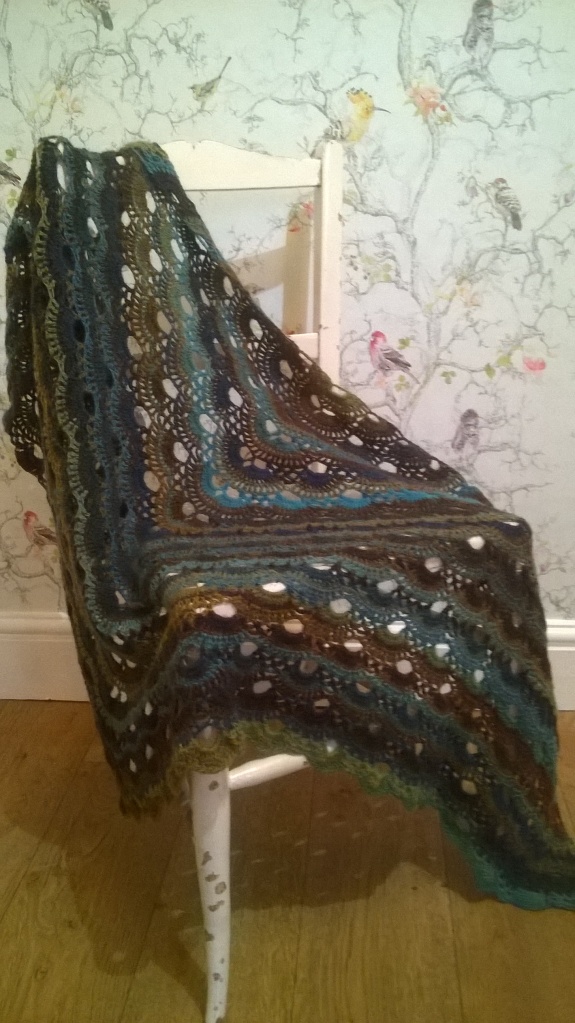
The yarn is Scheepjes Invicta Colour – 972, a 4 ply fingering weight yarn that is 75% wool and 25% polyamide.  The colour way is just gorgeous and the yarn was easy to hook with.  Occasionally the length of yarn withered  thin, but remained usable nonetheless.

a perfect size shawl to snuggle with...
a perfect size shawl to snuggle with…

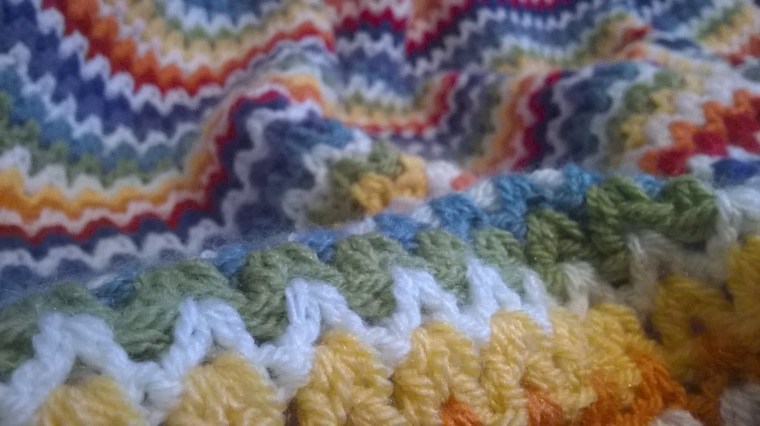
I adored the long colour repeats from turquoise blue into chocolate brown and sage green and couldn’t help get excited each time the colour change slipped over my hook…I don’t think I will ever get bored with the delight a colour changing yarn gives.

wp_20161224_14_49_17_pro
A perfect Christmas present for my Mom…

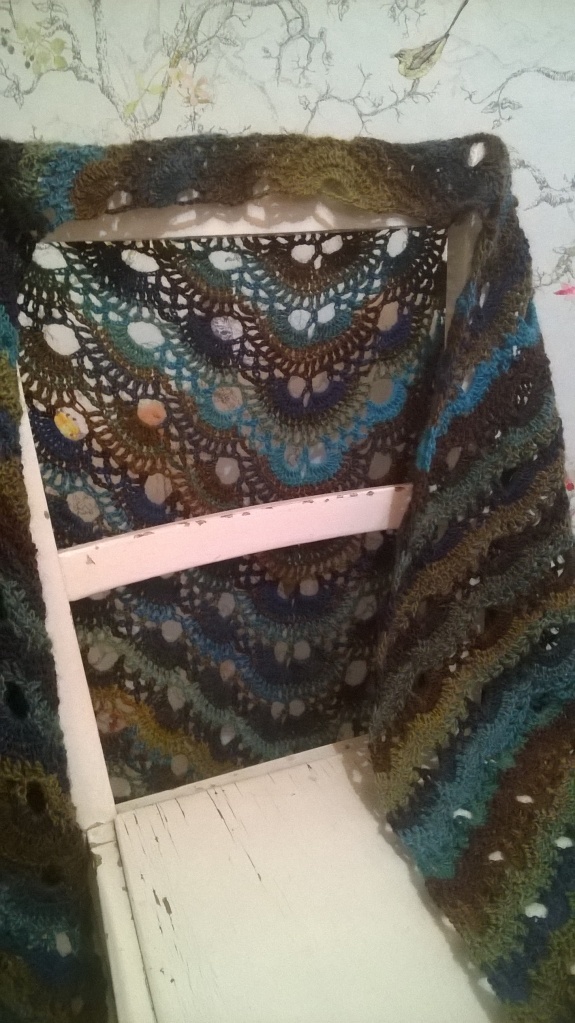
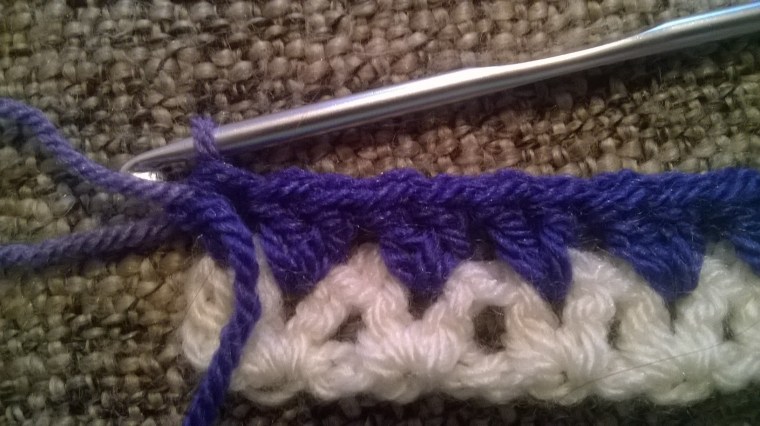
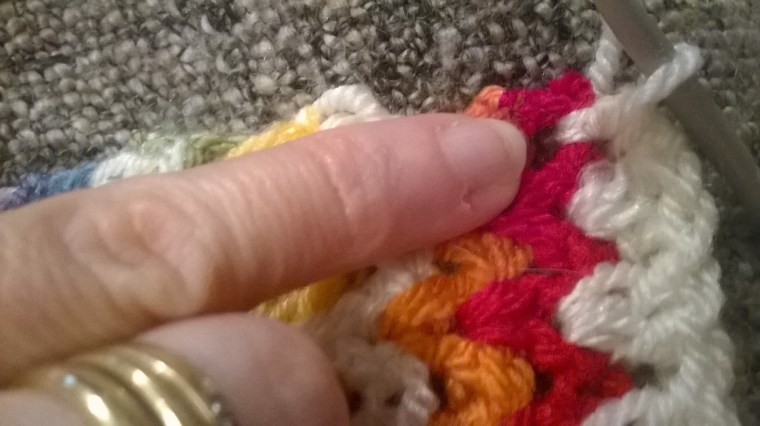
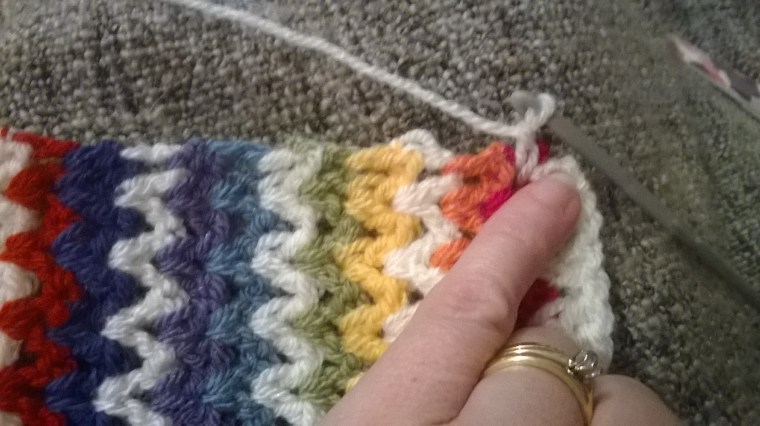
The eyelets that form in sequenced linear fashion amazed me.  I couldn’t quite believe that a few trebles could create such a beautiful drape and fabric.  They reminded me so much of a peacocks tail feather that I had to name this virus shawl The Chocolate Peacock!

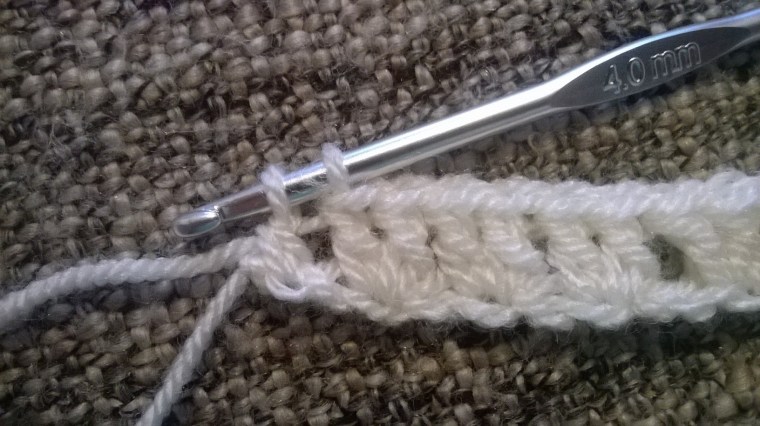
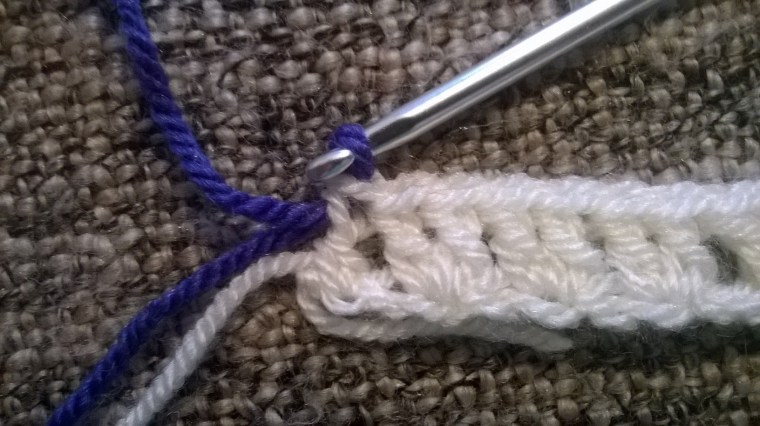
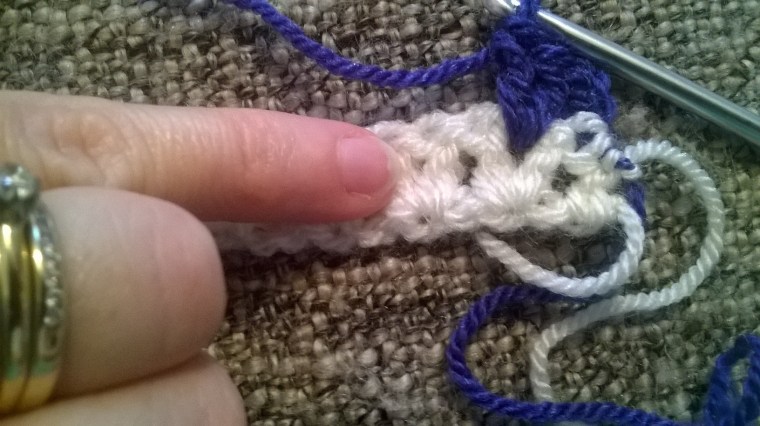
wp_20161224_14_47_44_prowp_20161224_14_48_53_proAll in all a beautiful hook up made all the more simple by following a youtube tutorial of which there are several, I really liked this one though

This pattern is all over the internet, I used this one on Ravelry as a free download. 

As for the yarn would I use it again…

wp_20161224_14_53_55_pro

 yes, to make another virus shawl of course, but this time in beautiful sunset shades (colourway 959). 

I may possibly have developed a shawl addiction.

xxxxx

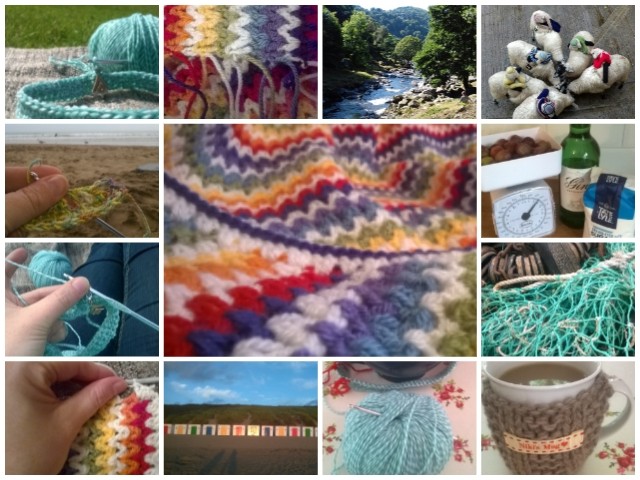
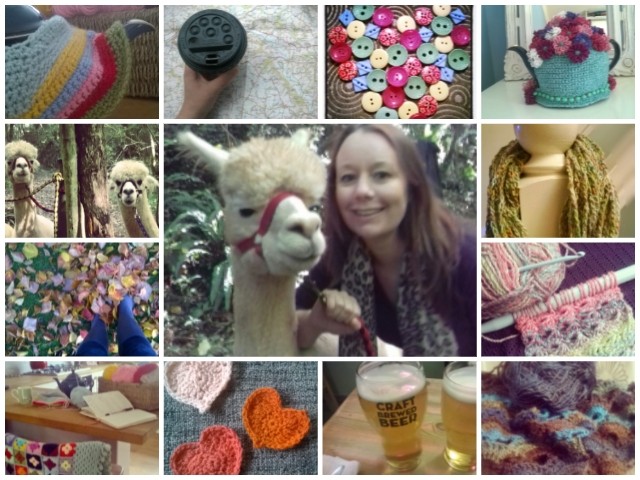
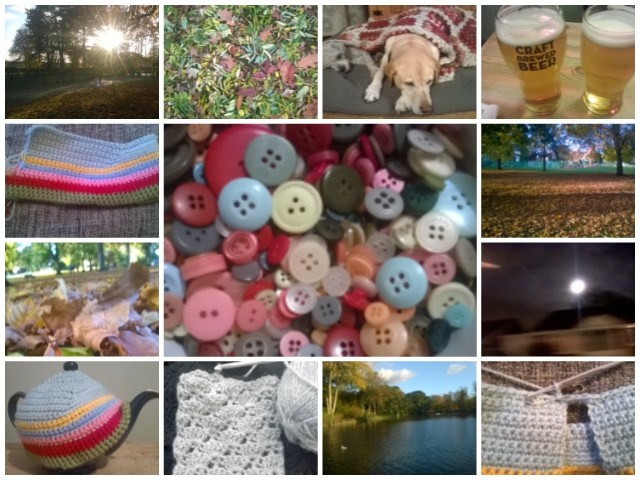
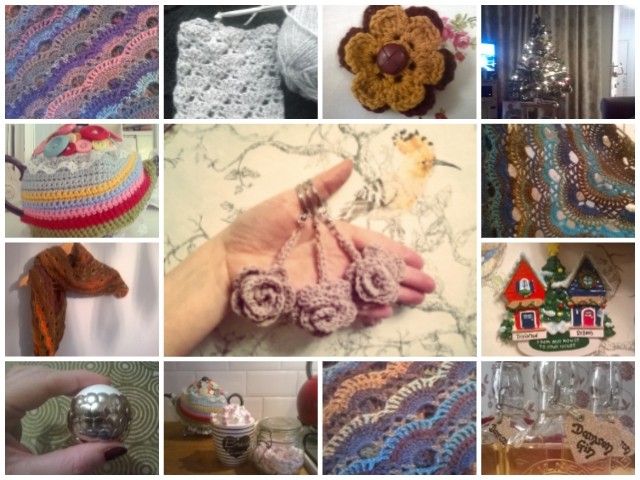
2016 Montage

I love this time of year; for me it’s a real time of reflection, a time to look back in wonder at the year gone by. 

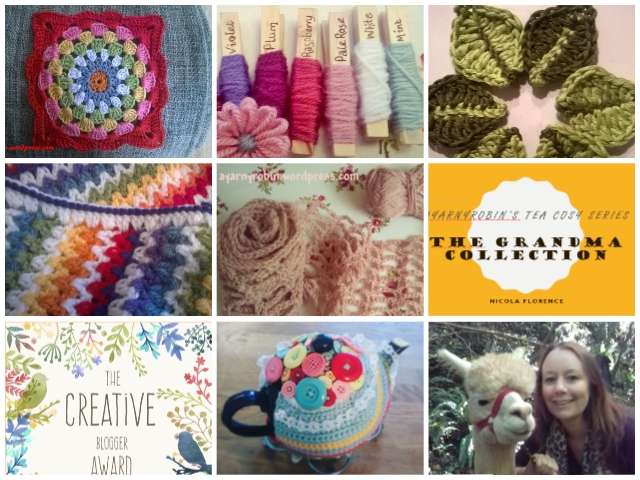
And what a year it has proven to be, both personally and here at the Nest too.  This year I have created a montage of my favourite memories, both hooky and the not so hooky!

January 2016

WriteOnImage635941710229816305

Started with a lovely little trip to the worlds smallest library…in a phone box and finished with felt flowers.

February 2016

WriteOnImage635941700701818089

Was filled with my Flower Fiesta installation and saw the release of a yarny little leaf pattern…on the house of course!

March 2016

635952209085949052 (1)

Maybe one of my favourite months this year as it was full of hookiness, creativity and some much needed soul restoration . Some much needed time away from studying for a PGdip, juggling placements, family, home and a whole heap of essays!  There was the Robins Nest Square pattern release, followed by a tutorial for joining with a double crochet and a BIG thank you.

 April 2016

april-2016Well, April really did whizz by under a heavy cloud of essay pressure, but I did find time to look for some lovliness and learn a new yarny skill despite a Woolly dilemma.

May 2016

may-2016

Was permeated with bluebells, al fresco dining and a woolly win.

June 2016

june-2016

Left me feeling chuft!

July 2016

july-2016

 was celebrated with a yarny give -a-way and a growing pile of PHD’s

August 2016

august-2016

Brimmed with crochet goodness; hooking al fresco, completing the very V blanket and tutorial and not forgetting the graffiti robin.

September 2016

sept-2016Saw the calm before the storm, a quilting Ouch! and the launch of The Grandma Collection.

October 2016

oct-2016Oh my days!

October held the secret of happiness…alpaca walking!  Enough excitement for one month you might think, but there was also the release of The Grandma Mary Tea Cosy pattern.  Too much!

November 2016

nov-2016Was bleak to be honest, but there was a WOW and a fond farewell

December 2016

636181886133248986-1

Ahh December and homemade damson gin, hooking virus style (post coming soon) and planning for project 2017 (launching in the New Year!!).  And there you have it…a whistle stop tour of my 2016.

I do have one more special thing to add before I sign off for 2016 and that is to you…Thank you so much for journeying with me, I love having you along.  I am always amazed by folk dropping in and reading what I write, it humbles me to my core.  I hope in return you have enjoyed and been inspired, encouraged and been blessed. 

Here’s to a very yarny 2017!

xxxxx

Grandma Mabel Tea Cosy…Free Pattern.

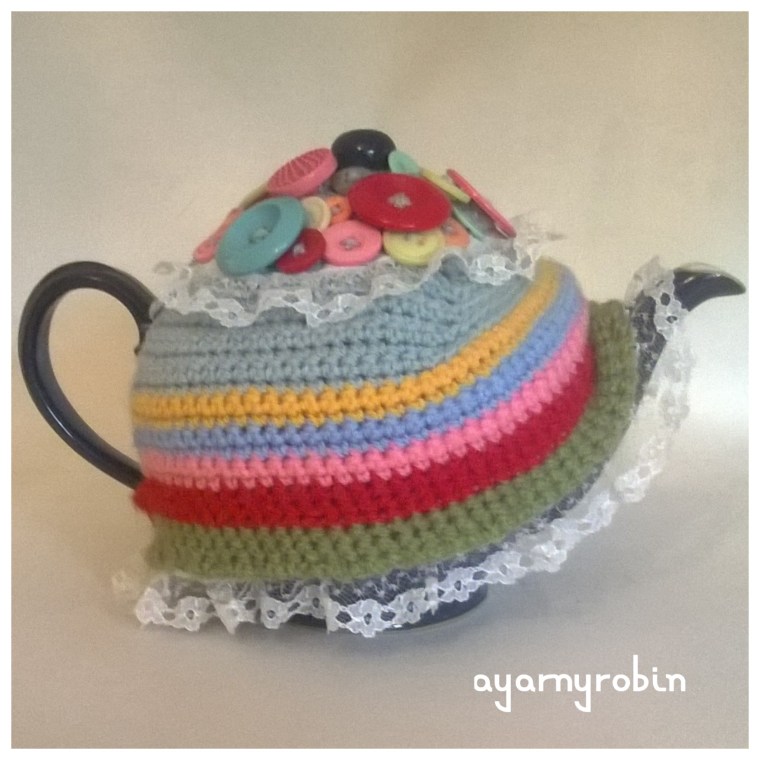
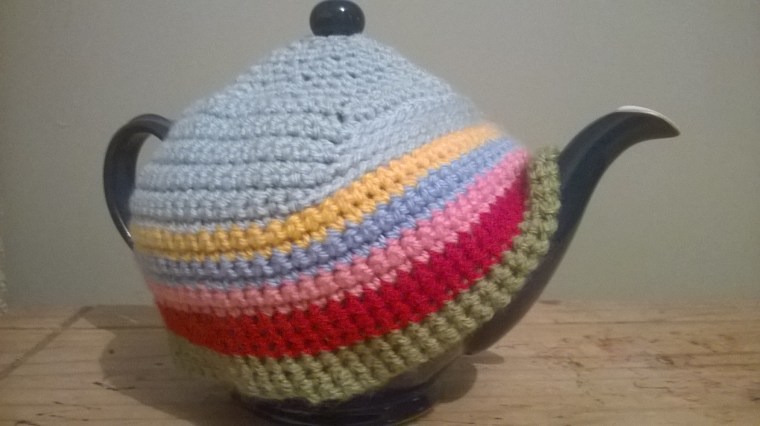
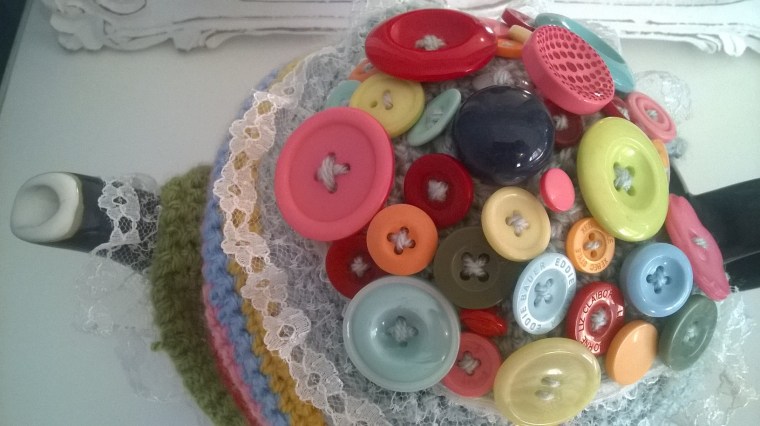
captureThis is the second tea cosy in the Grandma collection, designed with a slight twist on an original theme to keep your teapot well dressed and looking fine.  It is fun and frilly and a little OTT… but that’s what I love…


Dedicated to the inspiration that was ‘Mabel

wp_20161204_12_05_29_pro

  The pattern makes a tea cosy that fits a standard 4 cup teapot.

I used just under  50g of Stylecraft special dk yarn in colourway duck egg, lipstick, saffron, meadow, candyfloss and cloud.

You will also need approximately 40 buttons in similar colours and of  all different sizes which  were languishing in my button jar.

  wp_20161126_17_20_23_pro

Stitches used in this pattern refer to English terminology, however a conversion to US terminology is provided in brackets.

Ch – chain stitch 

slst – slip stitch

dc – double crochet ( single crochet)

dc tog – double crochet together (single crochet together)

You will also need:

a 4mm hook

a darning needle

scraps of yarn to use as temporary tie markers 

a stitch marker 

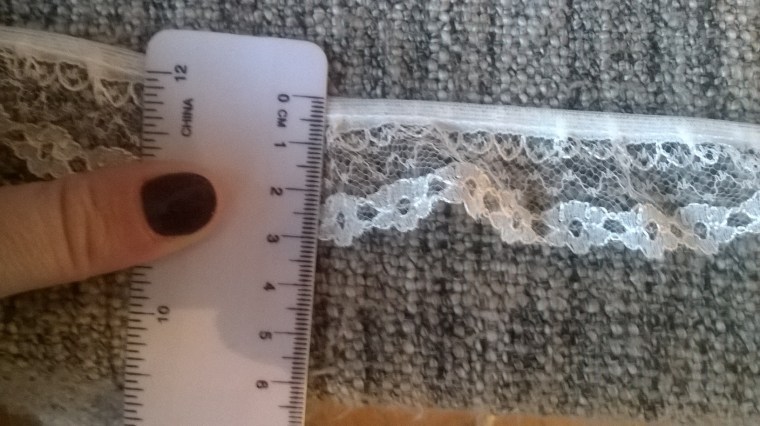
approximately 120cms of lace about 3cms wide

Top Tip: safety pins make excellent stitch markers! 

Ok, here we go…

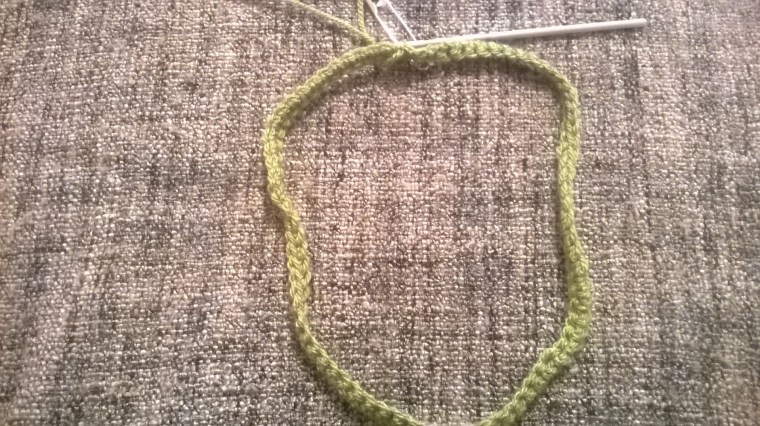
Using meadow Ch 80 and join with a slst to form a circle (before completing the slst make sure chain is not twisted).

wp_20161009_17_46_38_pro

It is a good idea to check at this point that the circle of chains fits around your teapot. (see end of pattern for instructions about adjusting pattern).

Row 1: Ch1 (mark with a stitch marker, does not count as a dc), dc in each ch around,

finish with a slst in ch marked with a stitch marker taking care that work is not twisted when completing the slst. (80dc).

wp_20161009_20_35_12_pro

Row 2: Ch1 (remove stitch marker from previous row and place in this ch, does not count as a dc)

Dc in each st around, finishing with a slst in ch marked with a stitch marker. (80 dc).


Rows 3: repeat row 2, before joining with a slst in ch marked with st marker  (ie/ when you have the last 2 loops on your hook of the last st of the round – see photo)

wp_20161009_20_50_05_pro

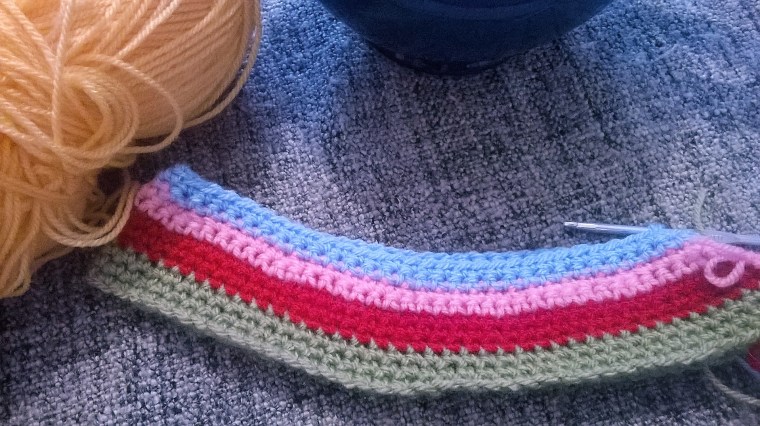
 join the lipstick (red) yarn and finish with a slst as shown below

wp_20161009_20_50_54_pro

Rows 4 – 6: repeat row 2

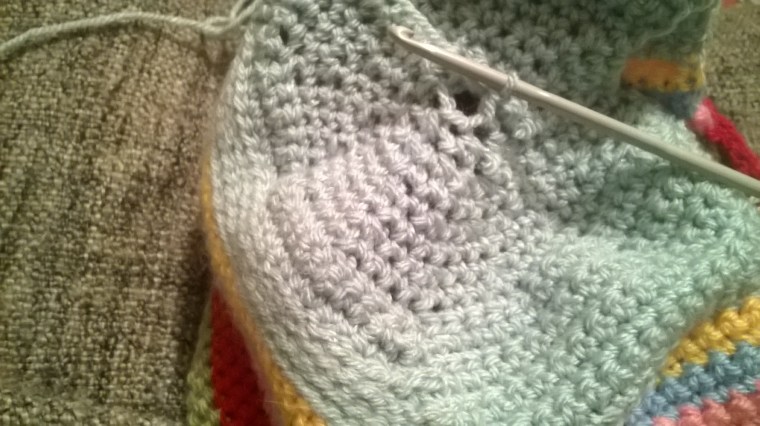
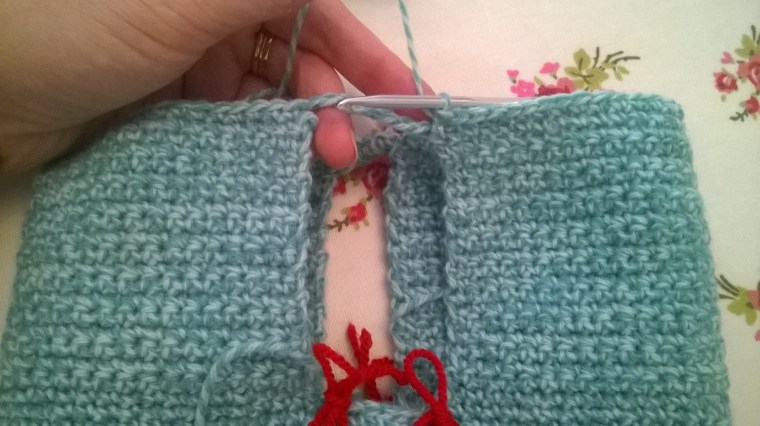
wp_20161009_21_18_28_proWe are now going to place a tie marker (a temporary mark) to indicate the space for the handle hole.  Before you start the next row, take a small scrap of yarn in a contrasting colour and thread through st marked with the stitch marker. Tie a bow. 

Row 7: Ch1 (remove st marker from previous row and place in this ch, does not count as dc), slst in the same st as the tie marker and in next 4 sts, mark this last slst with a second tie marker. This indicates the space for hole for the handle.

wp_20161023_18_24_47_pro

1dc in next 75sts around to stitch marker.  On 75th dc (last st)change to candyfloss (pink yarn) ie/ when last 2 loops on hook of the last dc as before.  Finish st with pink yarn, slstinto ch marked with st marker (75dc, 5 slst).

wp_20161023_18_35_21_prowp_20161023_18_36_55_pro

Row 8: Ch 1 (counts as a dc), turn work,  1dc in next 74sts (this row should finish in the st above the st marked with the tie marker in the previous round. 

wp_20161023_18_47_17_pro

Row 9: ch1 (counts as a dc) turn work, dc in next 74sts (75sts in total).  Change to sky blue yarn in last dc. 

Row 10: ch1 (counts as a dc) turn work, dc in next 74 sts (75sts in total). 

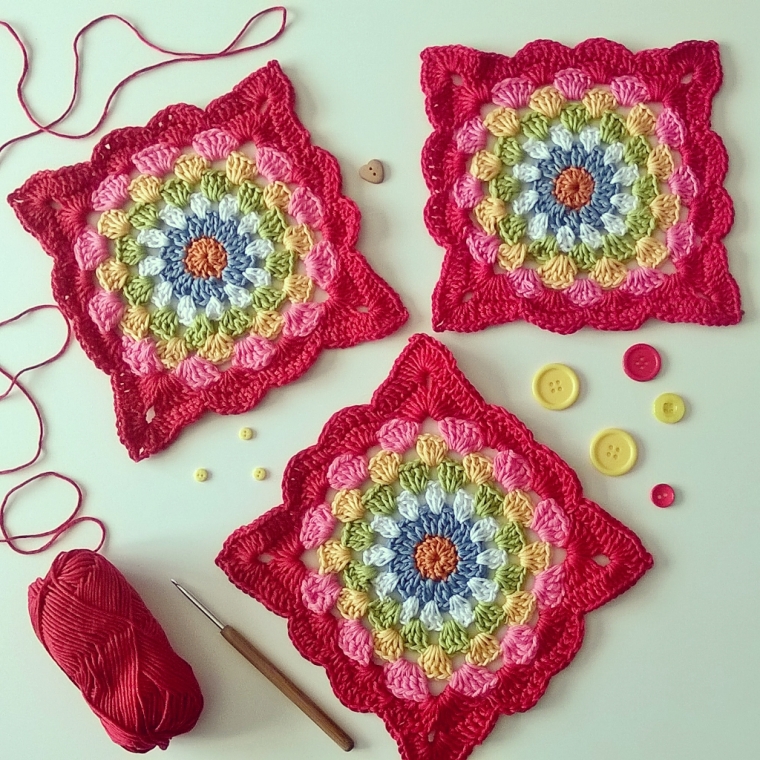
wp_20161023_12_35_10_pro

Row 11: Repeat row 9, changing to saffron (yellow yarn) in last dc.  Row 12: (saffron) Repeat row 9. 

Row 13: Repeat row 9, changing to duck egg yarn in last dc. 

Row 14: ch1 (counts as dc), turn work, dc in next 19sts, slst in next 35sts, dcin next 20sts (40dc, 35slst, 75sts in total). 

Row 15: Repeat row 14.

wp_20161023_20_14_35_proRow 16: ch1 (counts as a dc), turn work, dc in next 19sts, dctogin next st (sts 21 and 22), slst in next 31sts, dctog in next st, dcin next 20sts (42dc, 31slst = 73sts in total).

Row 17: ch1 (counts as a dc) turn work, dc in next 20sts, slst in next 31sts, dc in next 21sts (73sts in total). 

Row 18: ch1 (counts as a dc), turn work, dc in next 19sts, dctog in next st (sts 21 and 22), slst in next 29sts, dctog in next st, dc in next 20sts (42dc, 29slst = 71sts in total). 

Row 19: ch1 (counts as a dc), turn work, dc in next 20sts, slst in next 29sts, dc in next 21sts (71sts in total).  It should be starting to look a little something like this…

wp_20161126_15_42_13_pro

Row 20: Ch1 (counts as a dc) turn work, dc in next 19sts dctog in next st (sts 21 & 22), slst in next 27sts, dctog in next st, dc in next 20sts (42dc, 27slst = 69sts). 

Row 21: Ch1  (counts as a dc), turn work, dcin next 20sts, slst in next 27sts, dc in next 21sts (42dc, 27 slst = 69sts). 

Row 22: Ch1 (counts as a dc), turn work, dc in next 19sts, dctog in next st (sts 21 & 22), dctog in next st (sts 23 & 24), dc in next 21sts, dctog in next st, dctog in next st, dc in next 20sts (65sts). 

wp_20161027_12_00_35_pro

Your cosy should be starting to take shape now!

Row 23: Ch1 (counts as a dc), turn, dc in next 19 sts,dctog in next st (sts 21 & 22), dc tog in next st (sts 23 & 24),dc in next 17sts, dctog in next st, dctog in next st, dc in next 20sts  (61sts). 

We return to working in the round in the next row. 

Row 24: Ch1 (counts as a dc) – mark with a st marker, turn, dc in next 2sts, dctog in next st, *dc in next 3sts,dctog in next st*, repeat * -* around, finishing with 1dc in last st, ch3 and slst into st marked with stitch marker.

new pattern coming soon

 Row 25: Ch1 (remove st marker from previous row and place in this ch, counts as a dc), dc in each st around, finishing with a slst in ch marked with stitch marker (52dc). 

Row 26: Ch1 (remove st marker from previous row and place in this ch, counts as a dc), dc in next st, dctog in next st, *dc in next 2 sts, dctog in next st* repeat *-* around, finishing with dctog, slst in ch marked with stitch marker (39dc). 

Row 27: Ch1 (remove st marker from previous row and place in this ch, counts as a dc), dc in each st around, finishing with a slst in ch marked with a stitch marker (39dc). 

Row 28: Ch1 (remove st marker from previous row and place in this ch, counts as a dc), dctoginnext st, *dc in next st, dctog in next st* repeat *-* around, finishing with a dctog, slst in ch marked with a stitch marker (26dc). 

Row 29: Ch1 (remove st marker from previous row and place in this ch, counts as a dc), dc in each st around, finishing with a slst in ch marked with a stitch marker (26dc). 

Row 30: Ch1 (remove st marker from previous row and place in this ch, DOES NOT COUNT AS A DC), *dctog in next st*, repeat *-* around, finishing with a dctog, slst in ch marked with a stitch marker (12dc). 

Row 31: Repeat row 30 (6dc)

wp_20161126_17_14_09_proLeaving a small hole, fasten off and weave in ends.  The little hole allows for the knob of the teapot lid to poke through and helps to keep the cosy positioned on teapot.

wp_20161126_17_17_06_pro

Now hand sew on buttons of all different sizes.

wp_20161204_12_04_36_pro

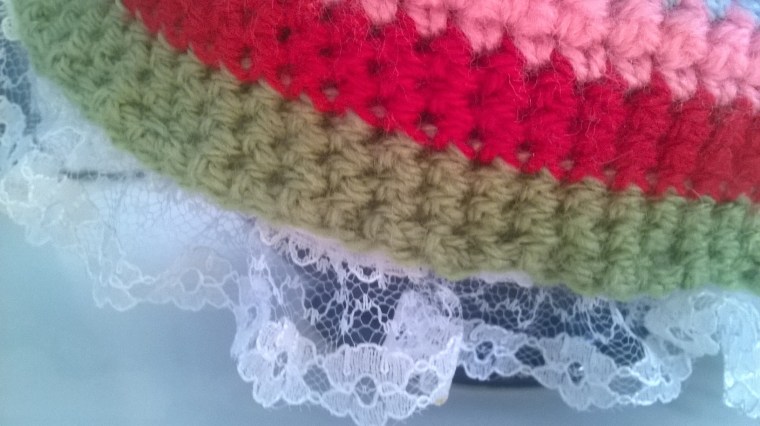
Next hand sew on the lace with a simple running stitch. 

wp_20161204_09_40_09_prowp_20161204_10_27_06_pro

I used meadow yarn for the lace at the bottom of the cosy and duck egg yarn for the lace around the buttons.

wp_20161204_12_04_06_pro

wp_20161204_10_45_15_pro

Just one last thing left to do now.  Boil the kettle and make a brew…enjoy and admire.

xxxxx

Grandma Mabel Tea Cosy part of the Grandma Collection ©2016 designed by Nicola Florence @ayarnyrobin

Introducing the Grandma Mabel Tea Cosy…

capture

I am thrilled to be finally introducing the ‘Grandma Mabel’ tea cosy to you.  The second cosy in the Grandma Collection


Dedicated to my Granny Mabel, whom I knew as Granny Jason.  Granny Jason was named so by myself when I was still in terry towel nappies.  Named after her dog Jason, it was my way of distinguishing between my two Grannies. 

Granny Jason was born  in August 1914 in Southern Ireland and in her younger days enjoyed driving tractors.  Moving to England in 1960 when my Mom was a little girl, she worked in factories and finally as an Auxillary Nurse before she became too unwell to work.   I was privileged to have had her in my life for just 10 years before she left this world at the age of 73. 

I have precious memories of my Granny Jason, who although unwell always found a way of making me feel loved.  She was a humble and unassuming woman, who was always busy in the kitchen and always had her hair done and was house proud.  She would always give you the best of what she had and keep the worn out and old things for herself. 

She loved shoes and made daisy chains and made the dog (Jason) a cup of tea with a sugar in, poured into his bowl, each time she made my Grandad a cup of tea…which was often!

wp_20161126_17_20_23_pro

Granny Jason was often unwell, seriously now I realise as I am older, but she tried hard not to let it show.  I remember as a small child counting her tablets into a big medicine jar. There were all sorts of pills; round ones, oblong ones and all sorts of colours…

I loved this job…

maybe it was the beginning of my fascination with public health and my nursing career.

But I think family was the most important thing to her,  because she cared so much about her family and cared so well. 

wp_20161204_12_03_21_pro


This cosy has been inspired by my memories of her.  The buttons representing those many colourful pills that I used to count, not understanding the gravity of how poorly she really was.  The pretty colours of the cosy reflecting her beauty and the lace representing the finest dress a tea cosy could have.

wp_20161204_12_04_22_prowp_20161204_12_04_36_pro


  I know Granny Jason would have been proud to put this cosy on her teapot, to put that teapot on her hostess trolley and wheel it from the kitchen to serve her guests. 

wp_20161204_12_04_06_prowp_20161204_12_03_53_prowp_20161204_12_05_34_pro


So that is the Grandma Mabel tea cosy in all of its glory, I will post the pattern in the week.

xxxxx


A yarny little heart…free pattern.

My hands have been yearning to hook in the evenings lately; but the projects I have on the go at the moment (which have to remain secret at least until after Christmas) are rather more intricate than I dare attempt at such an hour where I am prone to the odd gin and tonic or two as well as a little snooze. 

So whilst creating numerous chains the other evening…see here .  I found myself hooking up a yarny little heart with not a care of the process noted down at all. 

crochet heart

Fast forward a couple of evenings later when the nest was still and quiet, I found myself unable to sleep, thinking of creative yarny possibilities and my yarny little heart began to trouble me. 

So, I found myself unpicking my heart and writing down the pattern and my world was well again. 

So here is my pattern for a ‘yarny little heart’.

This little heart is a great stash busting hook up as it only requires scraps.

You will need:

scraps of yarn, I used baby / sport weight…but you can use what you have. The thicker the yarn the bigger the hearts.

3.5mm hook, (or hook size to suit your yarn choice)

darning needle to weave in the ends. 

Abbreviations used UK terminology (American terminology in brackets)

Ch – chain,         

slst – slip stitch,           

dc – double crochet (single crochet)               

htr – half treble (half double crochet)

tr – treble (double crochet)              

dtr – double treble crochet ( treble )

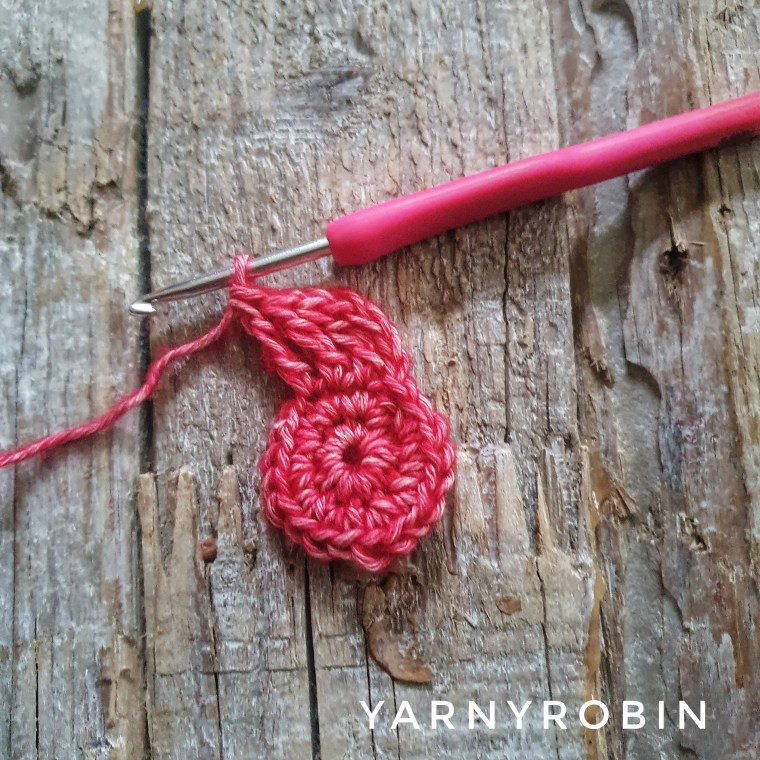
Begin with ch2

Round 1: 10dc into 2nd ch from hook (10dc). 

Turn circle over and give the tail end a firm tug…this should pull the centre of the circle into a more closed position.

Turn back over.

Round 2:

Ch 1, 2dc in each st around (20dc)

crochet heart

Round 3:

Ch4 (counts as a dtr), 1dtr in the next 3 sts,
crochet heart

1tr in next 4sts,

crochet heart

1htr in next st, dc in next st,

ch3,  slst into same space (this creates a picot),

crochet heart

dc in next st, 1htr in next st,

1tr in next 4 sts,

1dtr in next 4 sts, slst in to ch1 of beginning ch4.

Round 4: ch4 (counts as a dtr),

3dtr into next 3sts (these are actually the chains from previous round)
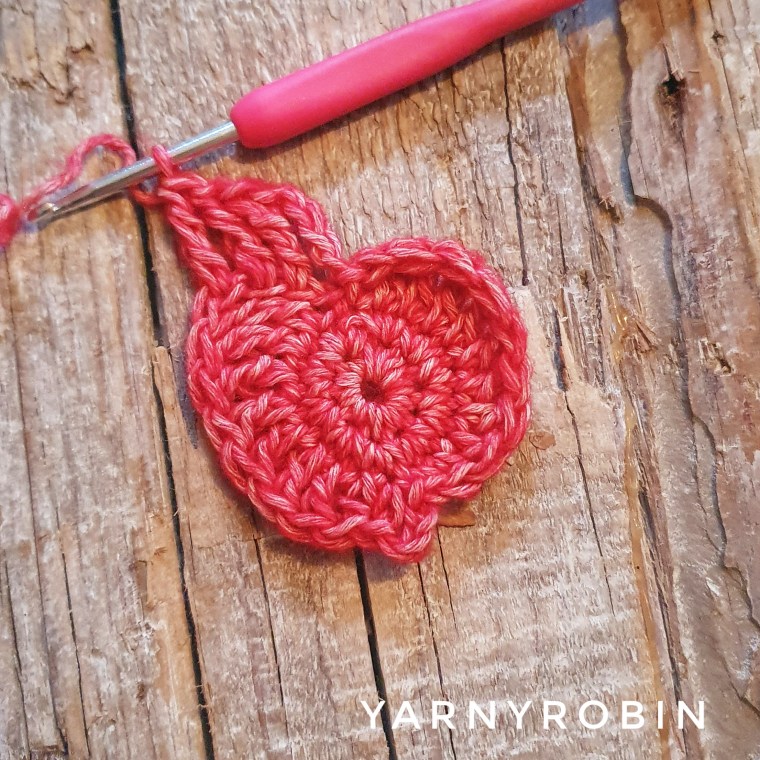
crochet heart

1tr in next 3 sts, 1htr into the next st, 1dc in next 4sts,

Slst in picot space

ch3, slst in to same space (picot made)
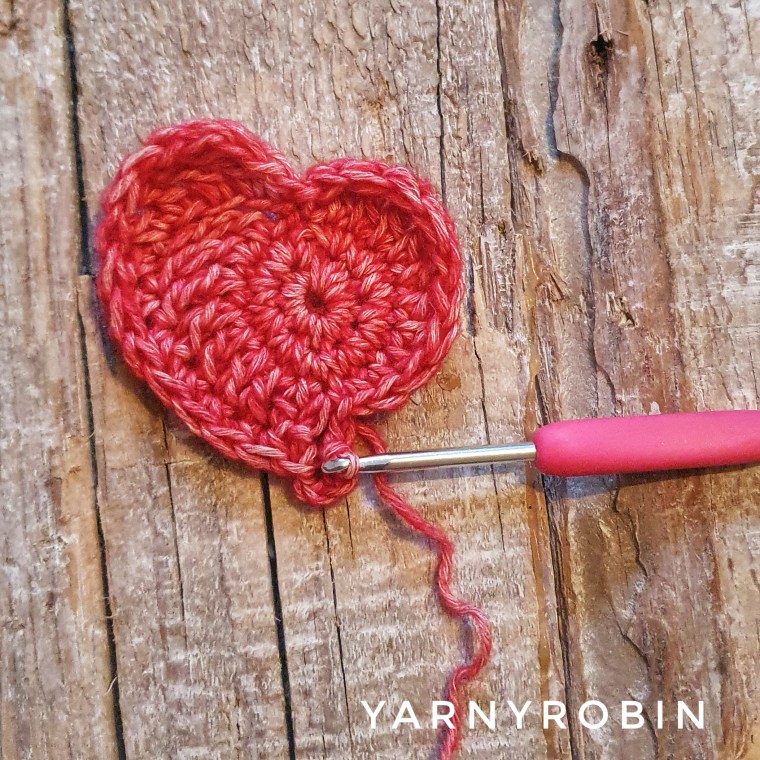
crochet heart

1dc in next 4 sts,1htr in next st, 1tr in next 3 sts, 1dtr in next 4sts,

slst in to  the cleft of the heart
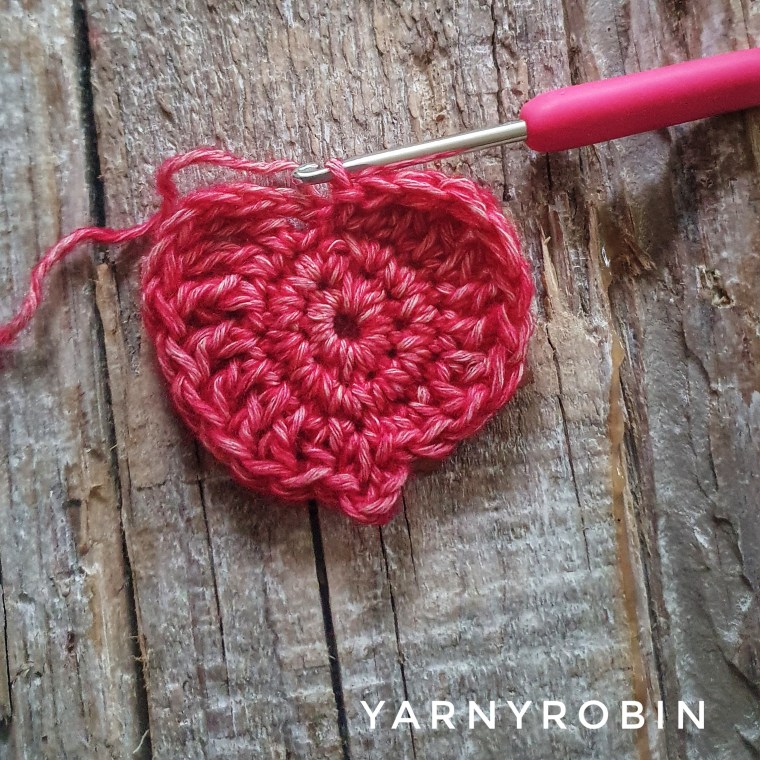
crochet heart

Fasten off and leave a long tail if you are going to sew it onto another project as a decoration, or weave in the ends.

  Repeat until your hearts content.

My Galentines cup cosy pattern uses this heart and the cosy pattern can be found for free just here.
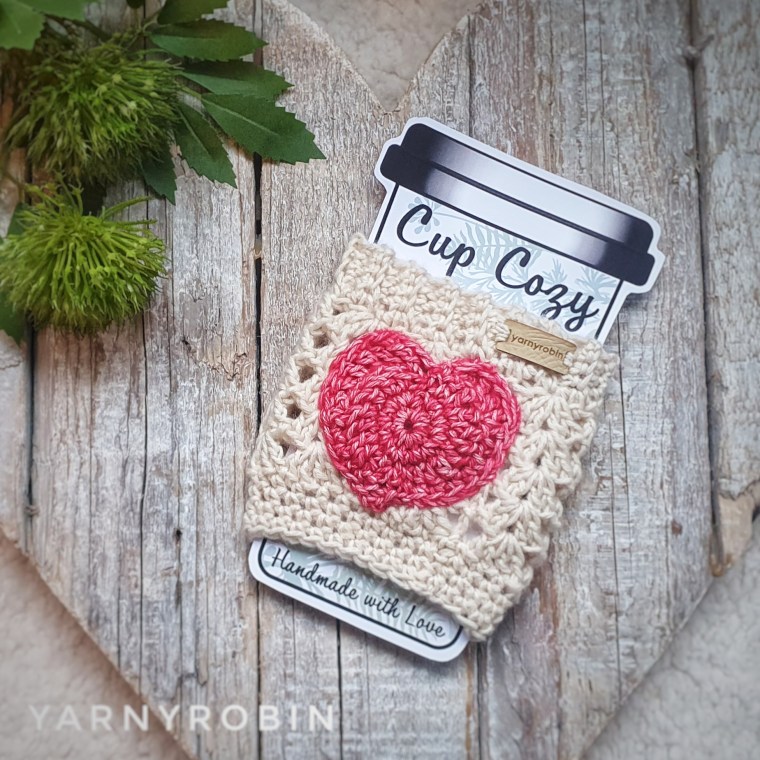
heart cup cosy

xxxxx

A yarny little heart ©2016 designed by Nicola Florence @ayarnyrobin 
Grandma Mary Tea Cosy Pattern

captureThis is a very pretty tea cosy, perfect for keeping your teapot dressed in style and your tea hot.  It is the first of a series of tea cosies which make up the Grandma collection.


Grandma Mary Tea Cosy

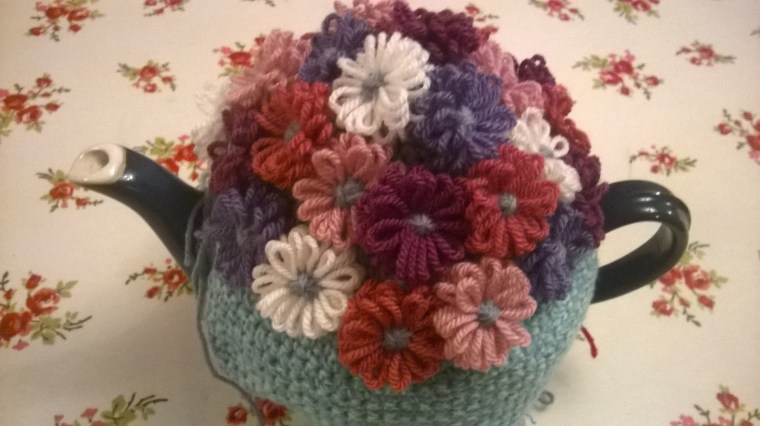
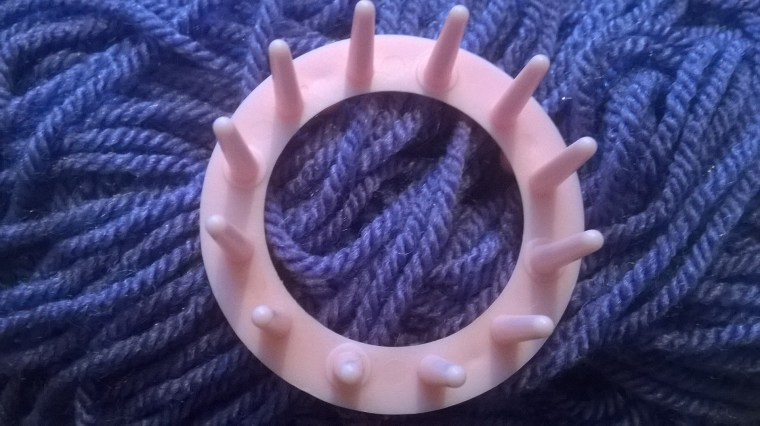
Dedicated to the inspiration that was ‘Mary’ the pattern has flowers made on a small flower loom, which are inexpensive to buy and relatively easy to use.  I purchased mine for about £3.

wp_20161001_12_21_06_pro

  The pattern makes a tea cosy that fits a standard 4 cup teapot

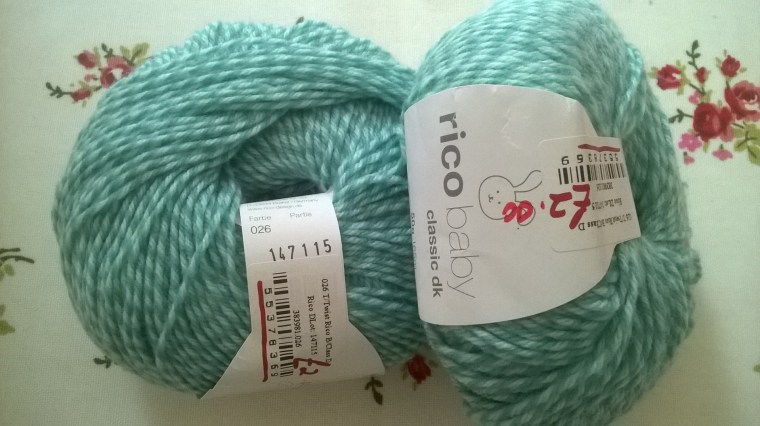
I used just under  50g of Rico baby classic dk yarn in colourway (026)

wp_20160826_16_53_44_pro

and scraps of yarn.

  I used scraps of stylecraft special dk in the following colourway (nb/the mint is Stylecraft life dk)

instagramcapture_cb640117-f4ce-4f39-813e-da7bc854082f

Stitches used in this pattern refer to English terminology, however a conversion to US terminology is provided in brackets.

Ch – chain stitch 

slst – slip stitch

dc – double crochet ( single crochet)

dc tog – double crochet together (single crochet together)

You will also need:

a small flower loom

a 4mm hook

a darning needle

scraps of yarn to use as temporary tie markers 

scraps of yarn to make flowers 

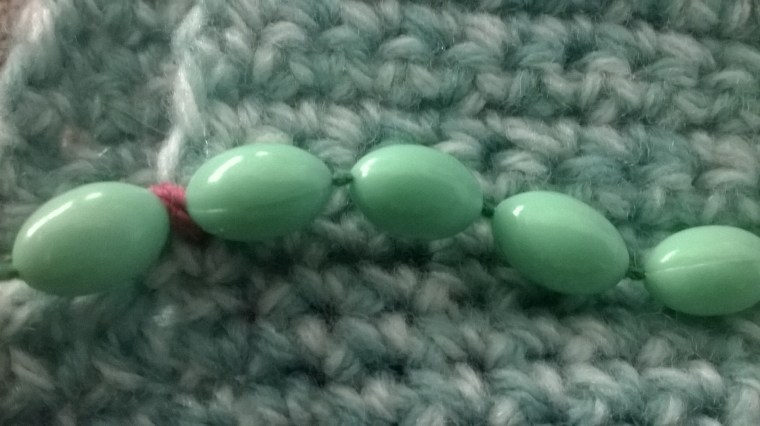
a string of beads 50cms long

50cms of lace 0.5cms broad

a stitch marker

Top Tip: safety pins make excellent stitch markers! 

Ok, here we go…

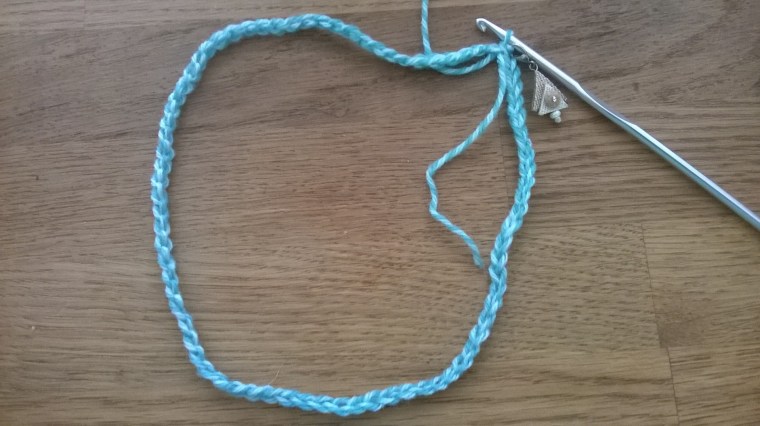
Ch 80 and join with a slst to form a circle (before completing the slst make sure chain is not twisted).

WP_20160829_13_15_50_ProIt is a good idea to check at this point that the circle of chains fits around your teapot. (see end of pattern for instructions about adjusting pattern).

Row 1: Ch1 (mark with a stitch marker, does not count as a dc), dc in each ch around

WP_20160829_14_56_30_Pro

finish with a slst in ch marked with a stitch marker taking care that work is not twisted when completing the slst. (80dc).

Row 2: Ch1 (remove stitch marker from previous row and place in this ch, does not count as a dc)

WP_20160829_15_08_41_ProDc in each st around, finishing with a slst in ch marked with a stitch marker. (80 dc).

Rows 3 – 5: repeat row 2

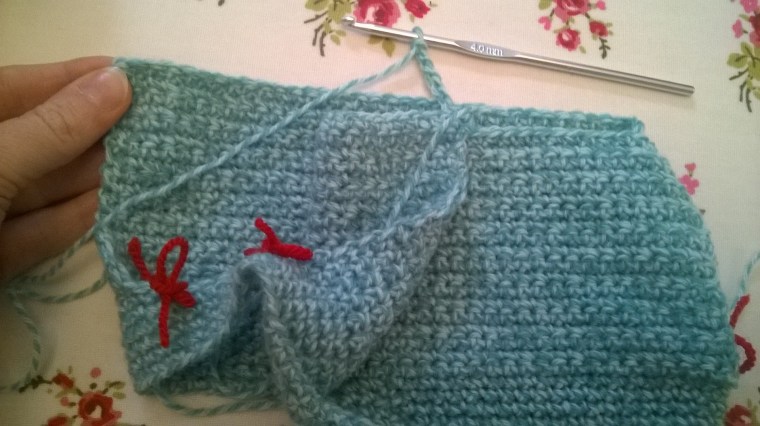
WP_20160829_15_45_36_ProRow 6: Ch 1 (remove st marker from previous row and place in this ch, does not count as a dc), 1dc in next 14sts, mark next st with a tie marker (different colour yarn which will be removed later – I just tied a bow in red yarn!) see picture below.

WP_20160831_11_11_30_Proslst in same st as tie marker and in next 6 sts  and mark last slst with a second tie marker as shown in the picture above.  This is where the spout hole starts!


1dc in next 33sts, mark next st with a third tie marker, slst in same st as tie marker and in next 4 sts, mark the last slst with a fourth tie marker. This is where the hole for the handle starts!

1dc in next 21 sts, slst in ch marked with a stitch marker. (35dc, 7slst, 33dc, 5slst). Fasten off.

WP_20160831_11_20_31_Pro

This next part of the pattern is worked in rows as side (a) and side (b) and forms the sides of the cosy.

So let’s do side (a) first…

Row 7a: Join yarn in st next to the 4th tie marker and to the right hand side of the stitch markerWP_20160831_11_30_09_Pro

ch1 (does not count as a dc), 1dc in next 35 sts to next tie marker, turn.

Row 8a: ch1 (does not count as a dc), 1dc in next 35sts to tie marker, turn.

Rows 9a – 25a: repeat row 8a, fasten off.

WP_20160831_13_15_48_ProOK, now let’s do side (b).  Turn over work and join yarn in st next to  second tie marker on the right as shown.

WP_20160831_13_16_27_ProRow 7b: ch1 (does not count as a dc), 1dc in next 33 sts to next tie marker, turn.

Row 8b: ch1 (does not count as a dc), 1dc in next 33 sts to next tie marker, turn. Rows 9b – 24b: repeat row 8b.

WP_20160902_11_45_23_Pro

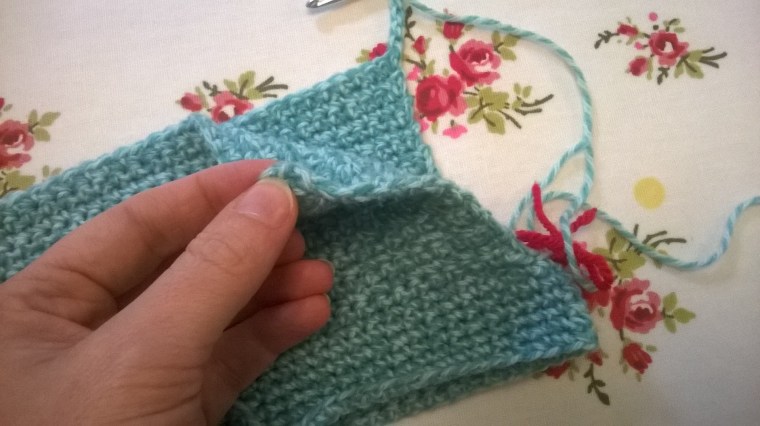
Row 25b: ch1 (does not count as a dc), 1dc in next 33sts to next tie marker, ch5,

slst into 1st st on row 25a as shown.

WP_20160902_12_44_46_Pro

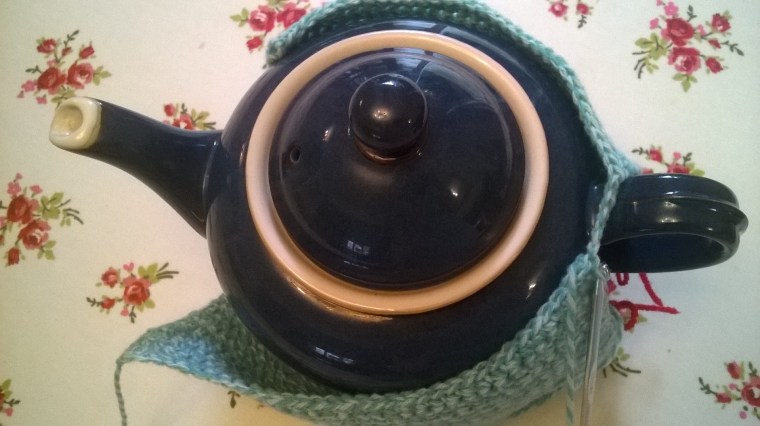
WP_20160902_12_43_31_ProAgain, this is a good point to check the cosies fit on your tea pot.  We return to working in the round again now.

So Row 26: Ch1 (mark with a stitch marker…NB/ this ch does count as a dc), dc in next 34sts, ch7,

WP_20160902_12_50_01_Prodc in next 33sts,

WP_20160902_13_13_20_Prodc in next ch5, slst into ch marked by stitch marker. (80dc).

WP_20160902_13_21_47_Pro

Row 27: ch1 (remove stitch marker from previous row and place stitch marker in this ch, counts as a dc), dc in next 34sts, dc in next 7chs

wp_20160906_15_14_56_prodc in next 38sts, slst in ch marked with the stitch marker. (80dc)

wp_20160906_15_39_50_prowp_20160906_15_39_34_proIt is now time to start decreasing the number of stitches to form the top of the cosy.  To do this a dc tog stitch is introduced.  Top Tip: each row that uses dc tog stitches finishes on a dc tog before slst in to ch marked with st marker!  Here we go…

Row 29: ch1 (remove stitch marker from previous row and place in this ch, counts as a dc), dc in next 5sts, dc tog in next st, *dc in next 6sts, dc tog in next st*

repeat * -* around,

finish with a slst in ch marked with stitch marker. (72dc). 

wp_20160909_13_18_43_proRow 30: ch1 (remove stitch marker from previous row and place in this ch, counts as a dc), dc in each st around, finishing with a slst in ch marked with stitch marker. (72dc).

Row 31: ch1 (remove stitch marker from previous row and place in this ch, counts as a dc), dc in next 3 sts, dc tog in next st,  

* dc in next 4 sts, dc tog in next st *, repeat *-* around,

finishing with a slst in ch marked with stitch marker. (60dc).

  Row 32: ch1 (remove stitch marker from previous row and place in this ch, counts as a dc), dc in each st around,

finishing with a slst in ch marked with stitch marker. (60dc).

Row 33: ch1 (remove stitch marker from previous row and place in this ch, counts as a dc), dc in next 2sts, dc tog in next st, * dc in next 3sts, dc tog in next st *, repeat *-* around,

finishing with a slst in ch marked with stitch marker. (48dc).

wp_20160909_14_01_34_pro

Row 34: ch1 (remove stitch marker from previous row and place in this ch, counts as dc),

dc in each st around, finishing with a slst in ch marked with stitch marker. (48dc).

Row 35: ch1 (remove stitch marker from previous row and place in this ch, counts as dc), dc in next st, dc tog in next st,

* dc in next 2 sts, dc tog in next st *, repeat *-* around, finishing with a slst in ch marked with stitch marker. (36dc). 

Row 36: ch1 (remove stitch marker from previous row and place in this ch, counts as dc), dc in each stitch around, finishing with a slst in ch marked with stitch marker. (36dc). 

Row 37: ch1 (remove stitch marker from previous row and place in this ch, counts as dc), dc tog in next st,

* dc in next st, dc tog in next st *

repeat *-* around, finishing with slst in ch marked with stitch marker. (24dc).

wp_20160909_14_58_12_proRow 38: ch1 (remove stitch marker from previous row and place in this ch, counts as dc), dc in each st around, finish by slst into ch marked with stitch marker. (24dc). 

Row 39:ch1 (remove stitch marker from previous row and place in this ch, counts as dc), dc tog in next st,

* dc tog in next st * repeat *-* around, finish with a slst in ch marked by stitch marker. (12dc).

Row 40:repeat row 39 (6dc).

Row 41: repeat row 39 (3dc). Fasten off.

wp_20160909_15_17_19_proYou should have something that resembles the above …now its time to make the flowers!!!

If you don’t know how to make loom flowers they are simple to make.  I highly recommend you watch a tutorial…I found this one excellent…

loom bloom video tutorial

wp_20160918_17_27_13_pro

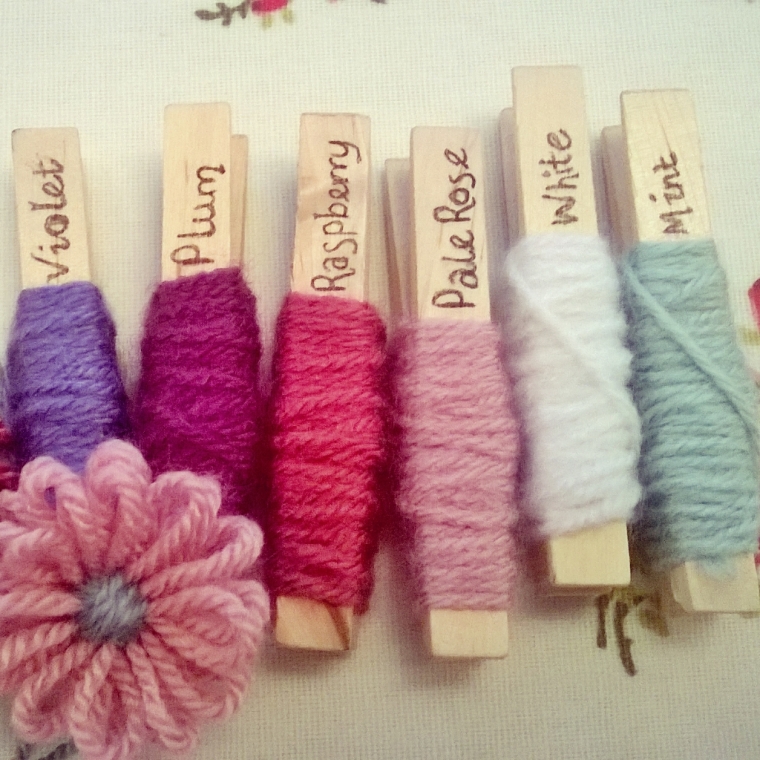
Make

x8 white / violet flowers

x10 raspberry flowers

x9 pale rose / plum flowers

all flowers to have the same colour centre…I used mint.  Leave long tails on each flower to make attaching them easier.

Keep back x1 raspberry, x1 white, x1 pale rose and x1 plum flower.

Begin to attach the rest of the flowers to the top of the tea cosy using the long tails and  darning needle.

wp_20160918_19_54_15_proContinue around

wp_20160918_20_07_31_pro

 Evenly attaching the flowers…

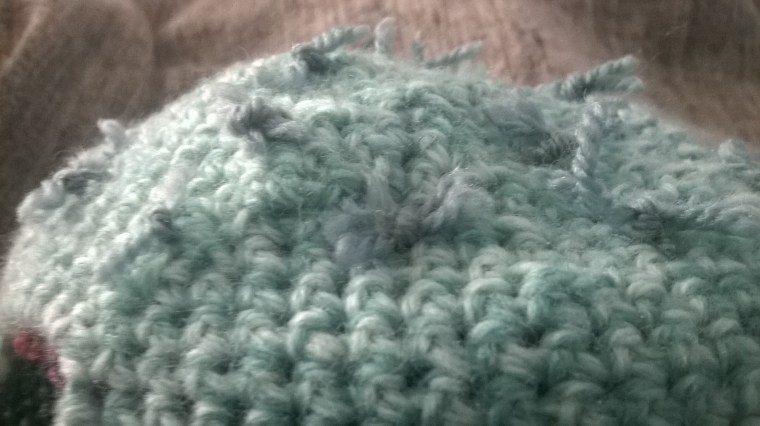
wp_20160918_20_32_27_proOnce attached turn tea cosy inside out and tie of all loose ends

wp_20160918_20_33_12_pro

Snipping to make tidy.

wp_20160924_12_48_51_pro

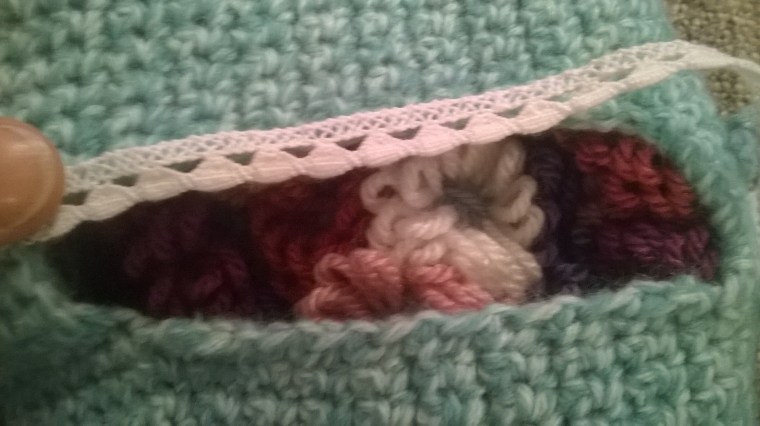
 Next, take the lace. Turning the tea cosy inside out tack the lace around the edge of the opening for the spout and the handle.

wp_20160924_18_13_18_prowp_20160924_18_14_11_pro

Turn, the cosy back to the right side; you should now have a cosy that is beginning to look very pretty indeed…

wp_20160924_18_44_20_pro


Taking the string of beads, thread a darning needle with some raspberry coloured yarn and tie a large knot.

wp_20160924_13_11_09_pro

 Starting at the bottom side of the handle hole pull the needle through from the inside of the cosy to the outside so that the knot cannot be seen.

wp_20160924_12_55_08_pro

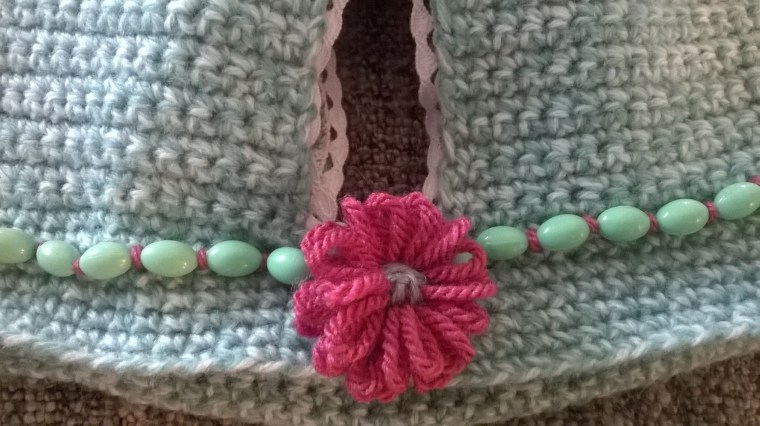
Begin to tack between each bead, fixing them in a line around the cosy towards the spout hole.wp_20160924_13_13_06_prowp_20160924_13_15_29_proOnce at the spout hole, snip the beads, turn cosy over and repeat on side b.

wp_20160925_16_57_02_proFinally, attach raspberry coloured flower at the bottom of the handle hole in the space between the beads.

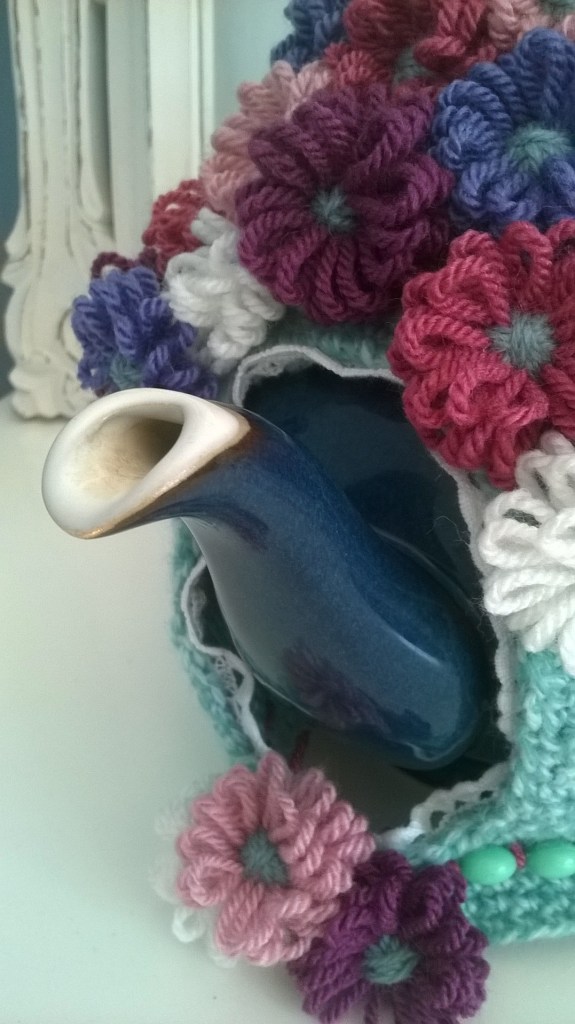
wp_20160925_17_05_30_prowp_20160925_17_08_50_proAttach remaining white, pale rose and plum flower in space between the beads at the bottom of the spout hole. Weave in any remaining loose ends.

wp_20161002_11_46_10_pro

Just one last thing left to do now.  Boil the kettle and make a brew…enjoy and admire.

NB/ TIPS FOR ALTERING THE SIZE OF THE cosy…regularly check the size of the cosy on your teapot.  The body of the cosy has the same amount of stitches as row 1, if yours is more or less than 80sts then keep the number of sts you have up to row 28  in order to create the handle and spout holes, place around your teapot and mark with tie markers as described then count your sts between each marker and substitute your numbers into the pattern.

xxxxx

Grandma Mary Tea Cosy part of the Grandma Collection ©2016 designed by Nicola Florence @ayarnyrobin

The Grandma Mary Tea Cosy

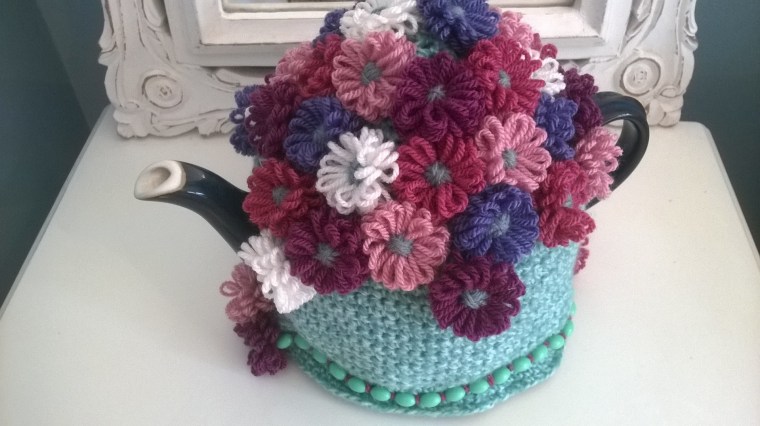
captureIntroducing the ‘Grandma Mary’ tea cosy…the first in the Grandma Collection

Grandma Mary Tea Cosy

Dedicated to my Grandma Mary who was a truly inspirational woman.  Born in October 1916 and christened Vera Mary, she grew up in England in the West Midlands and trained as a primary school teacher.  I was privileged to have had her in my life for 34 years before she left this world at the grand old age of 94.  Granny Mary played a huge part in nurturing my creativity as a little girl, teaching me how to make pompoms and to French knit  using a wooden cotton reel and some nails that my Grandad would have made.  She was a gentle and patient woman, who always had a smile and a piece of chocolate.  I once asked her what the best invention of her life time had been and without hesitation she quipped…’washing up liquid!’ 

wp_20161002_11_46_43_pro

Granny Mary worked hard, but always took time to make things pretty… whether that was pansies in the garden, geraniums in the porch, sugar on a peeled apple, a pretty apron whilst doing the housework or a tea cosy for the teapot.   
Prettiness was important because it was the way she cared for people  and her care was a true blessing. 

wp_20161002_11_46_10_pro

So this cosy had to be pretty, in colours that evoke memories of her and of course had to be covered in flowers.

wp_20161002_11_49_38_pro

  The beads at the bottom of the cosy actually belonged to her.  I  have a bag of broken plastic beads that she gave me – she never threw anything away! 

wp_20160924_13_15_29_pro

I am honoured to put them to good use…I think she would be really very pleased with their new use.

wp_20161002_11_45_46_pro


So that is the Grandma Mary tea cosy in all of its glory, here is the pattern linky thing.

xxxxx

The Grandma Collection

captureI’m so, so, soooo super excited to launch this new series here at the nest.

  I would like to introduce you to a collection of  beautiful tea cosies over the course of the next few months, named ‘The Grandma Collection’.  Each one dedicated to the inspirational women in my life. 

The patterns will of course be crocheted, but will also include other mixed media embellishment, making these cosies the perfect companion for your teapot….and as always the patterns will be free. 

If you have been following me on Instagram then you will have seen some sneak peeks…

WP_20160829_15_45_36_Proinstagramcapture_cb640117-f4ce-4f39-813e-da7bc854082finstagramcapture_894cbc90-dc64-47fa-a617-a09db0fd10bcThe Grandma Mary tea cosy… coming later this week.  I really hope you will enjoy this series with me.

xxxxx

Since this post was written there are now four stunning Tea Cosies available in this series…the links to each can be found below.

Mary

Mabel 

Dot 

Florence 

I do hope you enjoy these free patterns and that your tea pots love their new adornments.

xxxxx

Very V blanket tutorial

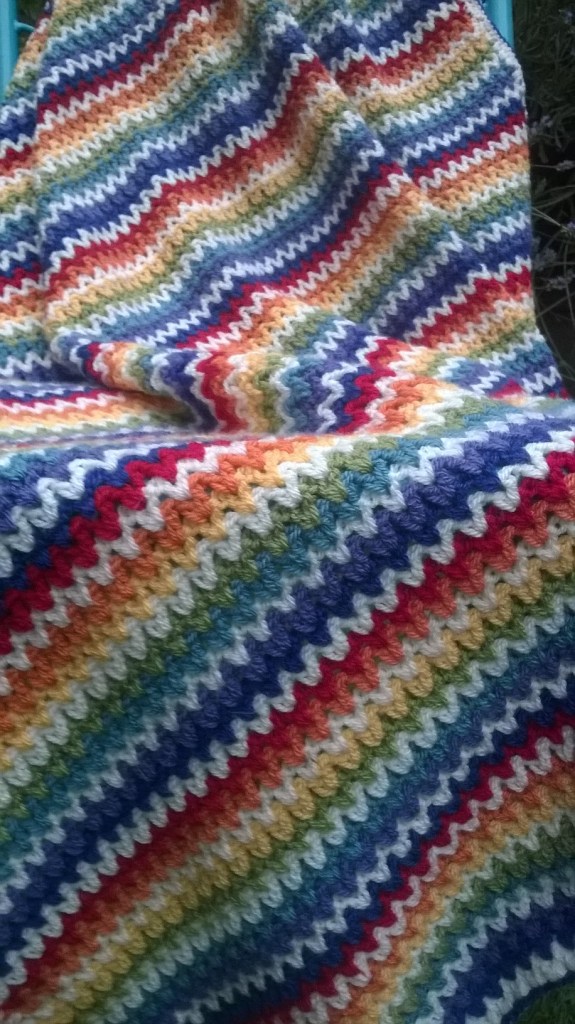
Thank you for your lovely comments about  my latest blanket off the hook…the ‘Very V’ blanket. 

It really is very simple to hook, so I thought I would put together a little tutorial, as I have not done one for a while and because I have some rare time off on my own.  The tutorial can be found below. You can also check out my latest free pattern The Angelece baby blanket by clicking on this link.

WP_20160811_20_01_00_ProSo, clearly this is not an original pattern.  I say that from the offset because of copyright and all of that.  Let’s be honest…the humble ‘v stitch’ has been around for years.  But this is my tutorial in case you want to have a crack for yourself and you have never done a ‘v stitch’ and you are a visual kinda gal or guy.

Processing…
Success! You're on the list.

Here we go!

Final measurements:  132cms x 120cms / 52″ x47″

I used Stylecraft special dk , for it’s durability, softness and price!  The colorway I used:

Lipstick x 1 ball

Meadow x1 ball 

Saffron x 1 ball 

Violet x 1 ball 

Spice x 1 ball 

Lobelia x 1 ball 

Storm blue x 1 ball 

Cream x 3 balls

You will also need a 4mm hook and a darning needle to weave in those ends! 

Of course if you are using different yarn then you may need to use the recommended hook size for your chosen yarn; and of course you can alter the finished size by hooking more or less chains to start. 

Your hooking tension (we are all different) may also mean you need more or less chains to start with. 

Lets start, are you ready? 

Abbreviations used are below and are English terminology.

Ch = chain stitch 

Chs = chains

Tr = treble stitch (double crochet in US terminology!)

St = stitch 

Slst = slip stitch

Sp = space

Pattern order I used:

Row 1:    Cream                 

Row 2: Lobelia                 

Row 3: Violet 

Row 4:   Cream                 

Row 5:  Storm blue        

Row 6: Meadow

Row 7:   Cream               

Row 8:  Saffron                 

Row 9:  Spice

Row 10: Cream                

Row 11: Lipstick               

Row 12: Indigo

Row 13: Cream                 

Row 14: Violet                   

Row 15: Storm blue 

Row 16: Cream                

Row 17: Meadow             

Row 18: Saffron

Row 19: Cream                

Row 20: Spice                     

Row 21: Lipstick

Row 22: Cream 

NB/   the first and last row form the edging for the top and bottom of the blanket so use the colour you wish to edge the blanket in, for row 1.

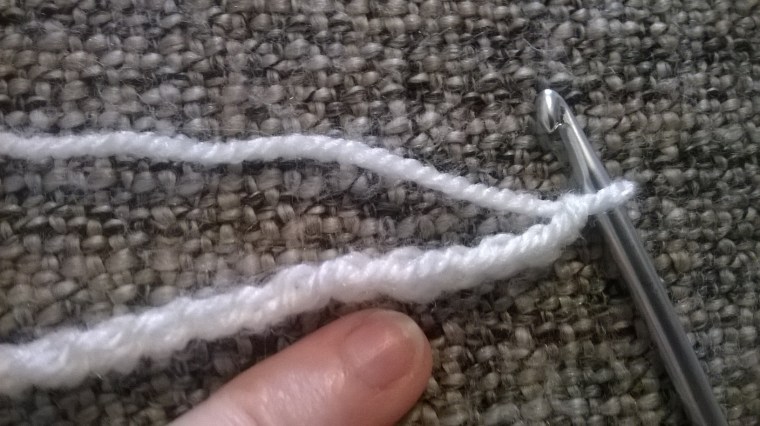
Chain 175 in cream

(This gave me about a 1m 15cm /42″ length of Ch.  But any odd number of Chs will work to suit the size blanket you are wishing to hook!).  
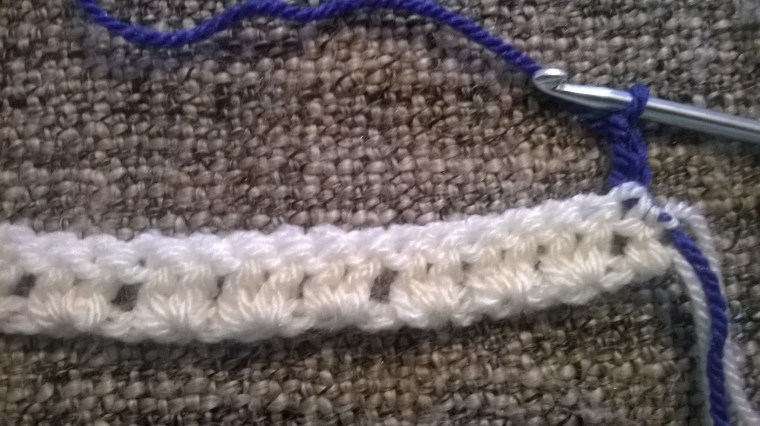
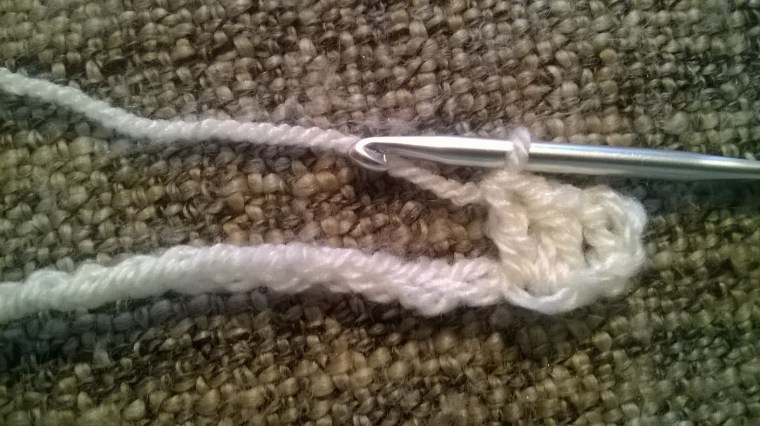
2tr in 5th ch from hook, 

WP_20160829_16_53_05_Pro miss a ch, 2tr in next ch

WP_20160829_16_53_44_Pro

miss a ch, 2tr in next ch

WP_20160829_16_55_02_Pro

 *miss a ch, 2tr in next ch*

Repeat *  –  * across the row. 
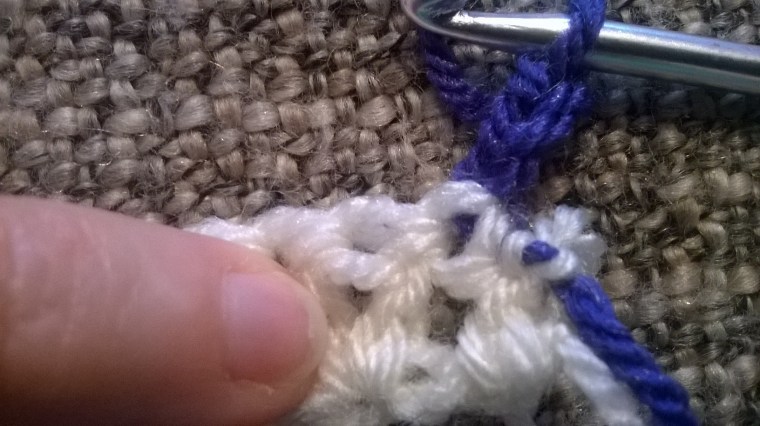
Finishing with 1tr in last ch.  Change colour. As shown below,  I change colour by completing half of the process for the last tr (ie/ leave two loops on the hook). Complete last part of tr in new colour as shown.

WP_20160829_16_57_03_Pro WP_20160829_16_58_00_ProI find this makes colour changes more secure.  These ends should be tied to secure further. Top tip! leave the ends long  (approx. 10cms) so that weaving in is easier.

Turn.  Ch3 (counts as 1tr)

WP_20160829_16_59_21_Pro 2tr in the middle of set of tr’s of previous row 

WP_20160829_17_00_07_Pro

Continue along the row.

WP_20160829_17_01_26_Pro
WP_20160829_17_01_56_Pro

finishing with 1tr in top of 3rd ch on previous row.

WP_20160829_17_04_16_Pro

Change colour. Turn. 

WP_20160829_17_06_00_Pro

And that’s it! 

Top Tip!! Weave in the ends every few rows.

Repeat rows 1-22 x5 times.

Then repeat rows 1 – 13 to finish body of blanket. And if you did not adhere to the top tip above…now is the time to weave in those ends!

InstagramCapture_a30fea23-613a-4f2f-8788-4163b29b22dd

I’ve gone all minimalistic for the edging because the blanket itself is simply stunning in this colourway and I did not feel like it needed something fussy to detract from its beauty. 

WP_20160811_20_06_44_Pro

This is what I did. 

The first and last row (in cream if you have been following this colourway) form the edging for the top and bottom of this blanket. In cream / your chosen edging colour join in the space at the bottom right of your blanket as shown.

WP_20160808_21_29_50_Pro (2)

Ch 3 and slst into the top st of the first tr/ch3 of 1st row.

WP_20160808_21_38_20_Pro

Ch1, 2tr in same sp

WP_20160808_21_39_16_Pro2tr in next sp (the sp is the gap between the side of the first sts of each row), 2tr in next sp.

WP_20160808_21_41_39_ProContinue along the edge until you come to the top corner. 2tr in last sp, ch 1, 1tr in same sp.

WP_20160808_21_21_54_Pro

Then slst into the top st of the first tr/ch3 of last row as shown. Fasten off.  Repeat for the other side of the blanket.

Finally, in Lobelia (or your chosen colour) join in any st of edge with a slst.

WP_20160808_22_12_06_Pro

Slst in each st around edge of blanket. Fasten off and weave in loose ends.  And that is it, you should now have one of these to snuggle under…or reluctantly gift.

WP_20160811_20_06_05_Pro

Well done if you got this far. 

I really hope you have found this tutorial easy to follow.  I welcome feedback, so let me know how you got on and if you want to share your picture of your finished make you can in the comment section below. 

I  would love to see what you have made.

xxxxx

A Yarny Giveaway…

Yes, that’s right I’m having a little yarny giveaway here at the Nest.  The purpose for such frivolity I hear you ask?

Well, it is a belated celebration of my 2 year blogging anniversary; which was actually back in June.  Whilst I was aware this occasion had come and gone, life was a little too hectic to mark the occasion.  So, I parked the celebration temporarily and am now ready with a little yarny give-a-way.

tumblr_inline_mg2jbnj5iC1qdalcy

This year has been frantic and I want to thank  all of my regular readers for being patient with me along this journey and for all of your cheering on! It has really helped me and if you’re relatively new around here consider it a welcome. 

So before I get to the give-a-way, I thought I would just highlight some of my favourite posts from the last 12 months.

 100 patch granny
100 patch granny

The 100 patch granny blanket…

blog post here

joining tutorial here

wpid-dsc_0621.jpgA hooky bake off

WP_20160127_09_29_27_SmartThe world’s smallest library

wp_20160217_21_40_10_proA yarny little leaf pattern

InstagramCapture_2131d25e-f4ba-4128-a9a3-6a8f70e4a67c


Robins nest square pattern

I love a little look back, don’t you?

So Give-a-way time…cue the party poppers!!! It’s easy to enter and is open to all.  The prize to covet is this…

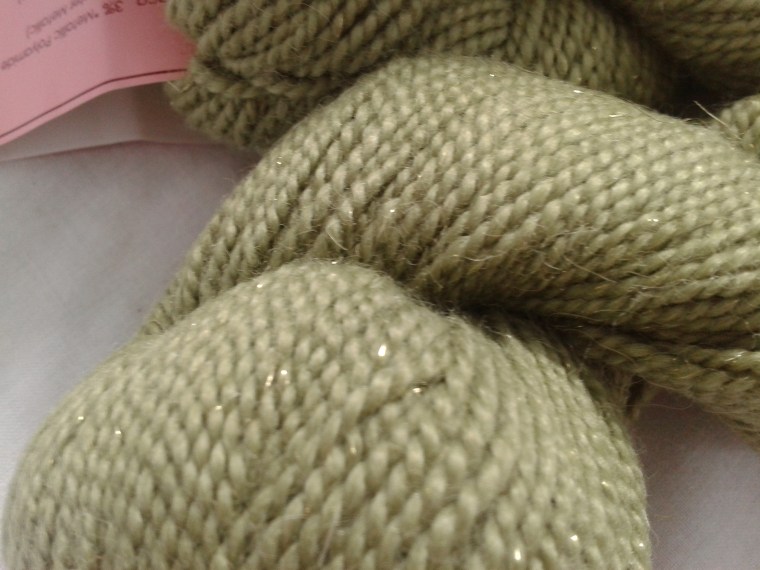
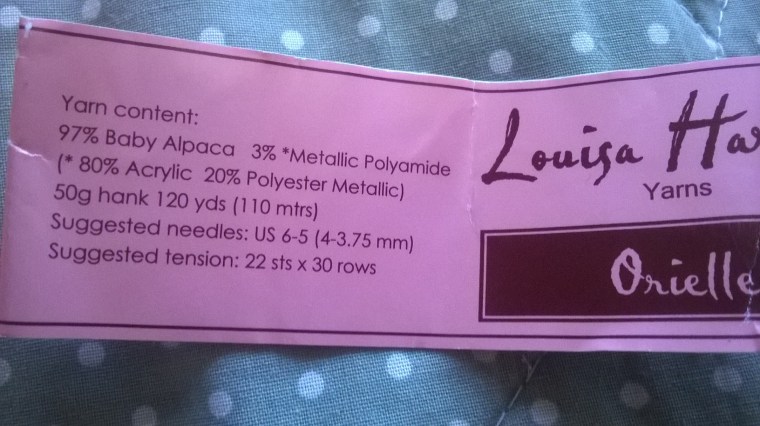
WP_20160729_19_28_04_ProA gorgeous hank of beautifully soft baby alpaca wool in Lichen by Louisa Harding; which has an added touch of sparkle with a fine gold metallic thread. 

glorious alpaca yarn

WP_20160729_19_28_23_ProWP_20160729_19_30_27_Pro


alpaca yarn

This yarn is gorgeous, I hooked with it a while ago…remember?

lightweight glamour...
lightweight glamour…

So the entry rules are simple.

All you have to do to be in with a chance of winning is leave a comment below.  If you are reading this on facebook then like the page and leave a comment also.  Simples!  Closing date for entries is 22nd August 2016.

xxxxx