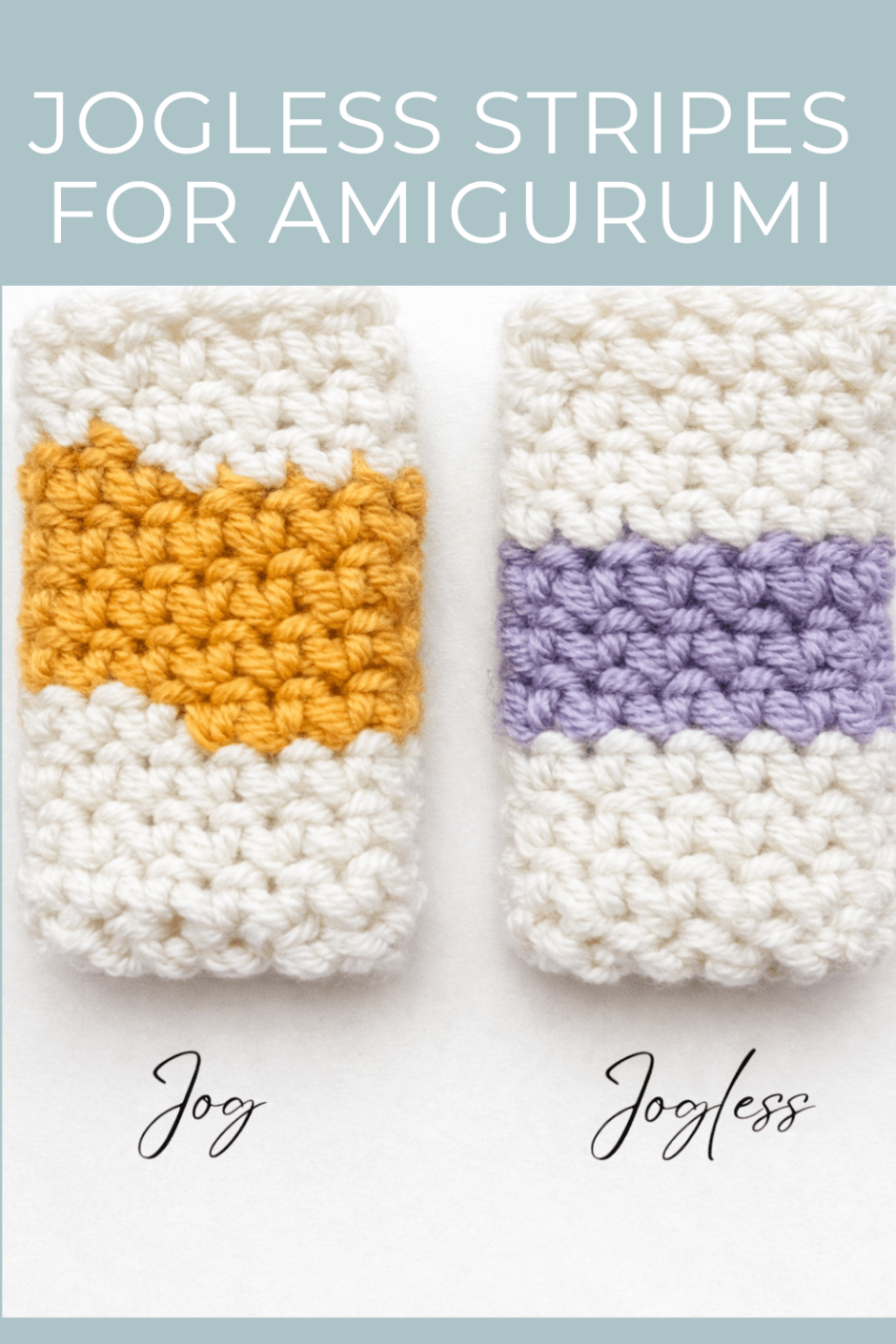
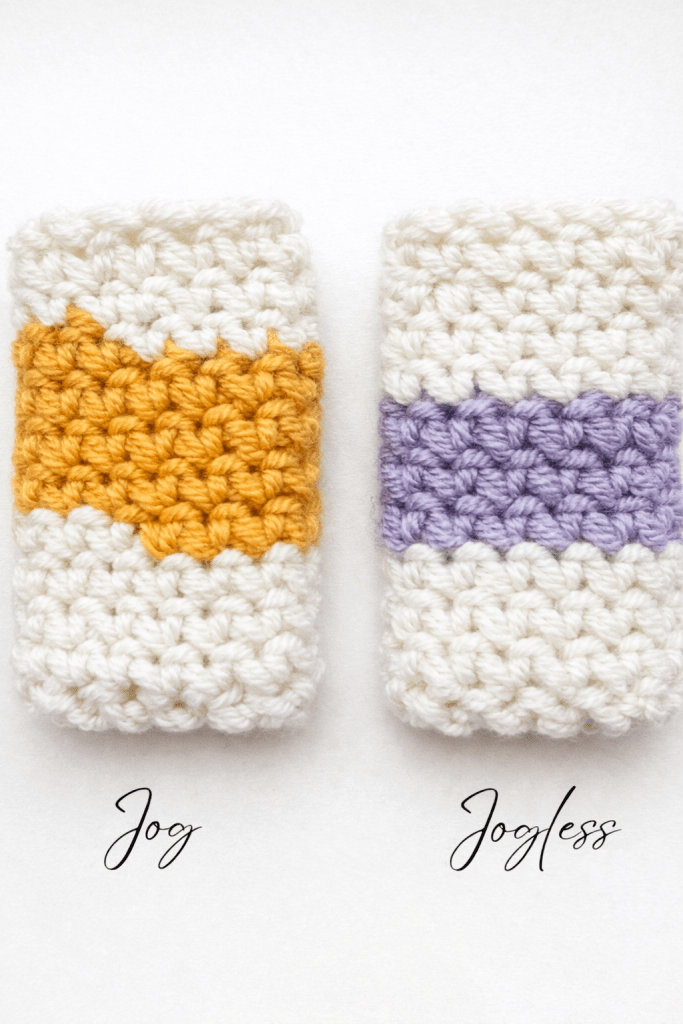
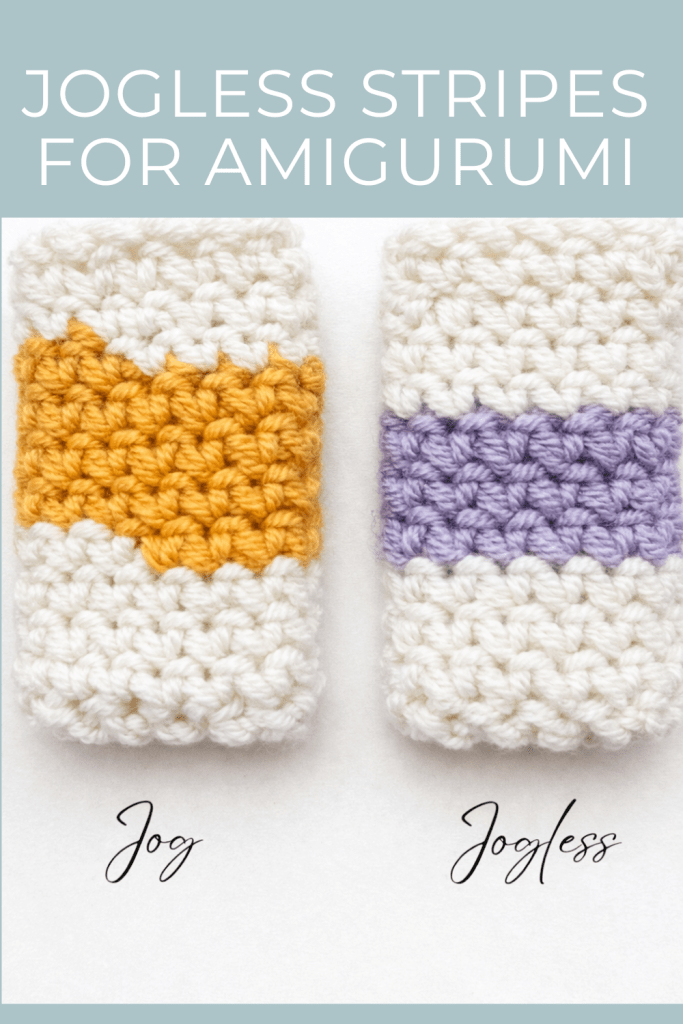
If you’ve ever added colour changes to amigurumi and spotted a visible step or “jog” where the stripe joins, you’re definitely not doing anything wrong. It’s a really common crochet quirk. This is especially true in small, tightly stitched amigurumi. However, it can be a little annoying once you notice it. That tiny step can make your stripes look less smooth and slightly more homemade than you’d like, particularly on high-contrast colour changes or gift-worthy pieces.
The good news? There’s a simple way to create smooth, jogless stripes in amigurumi that instantly makes your work look more polished; and I’m going to share with you how I do it.

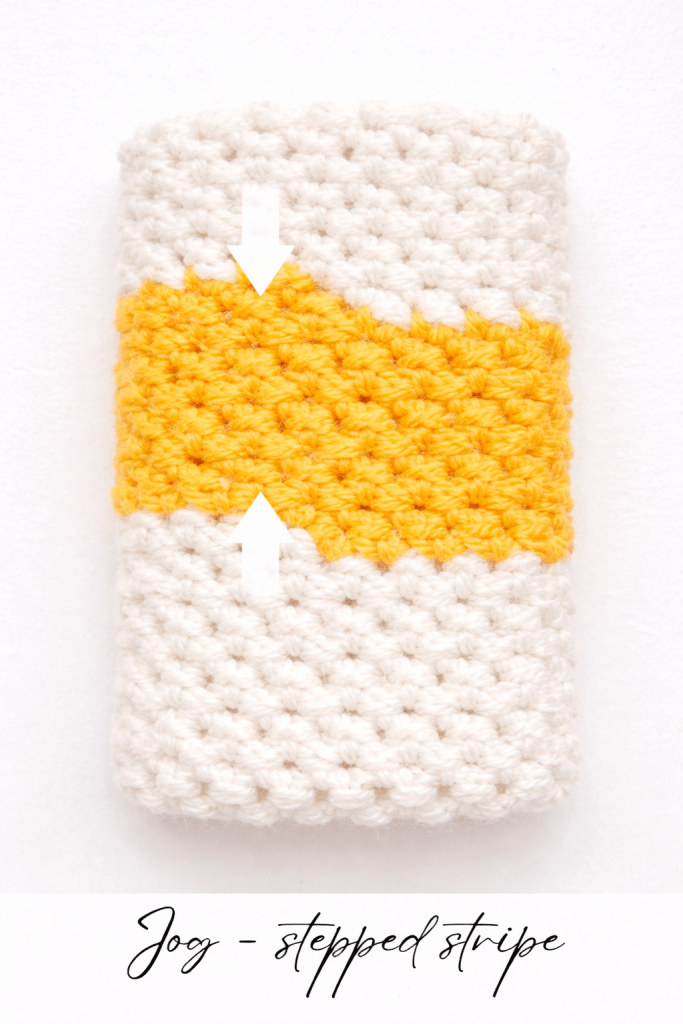
Why Do Stripes Jog in Amigurumi?
Amigurumi is usually worked in continuous spiral rounds (without joining).
Because crochet stitches naturally lean, colour changes slowly drift upward, creating that stepped look.
This is most noticeable when:
- Using contrasting colours
- Making narrow stripes
- Working on small plushies
A jogless stripe technique helps visually realign the colour change, even though you’re still crocheting in a spiral.
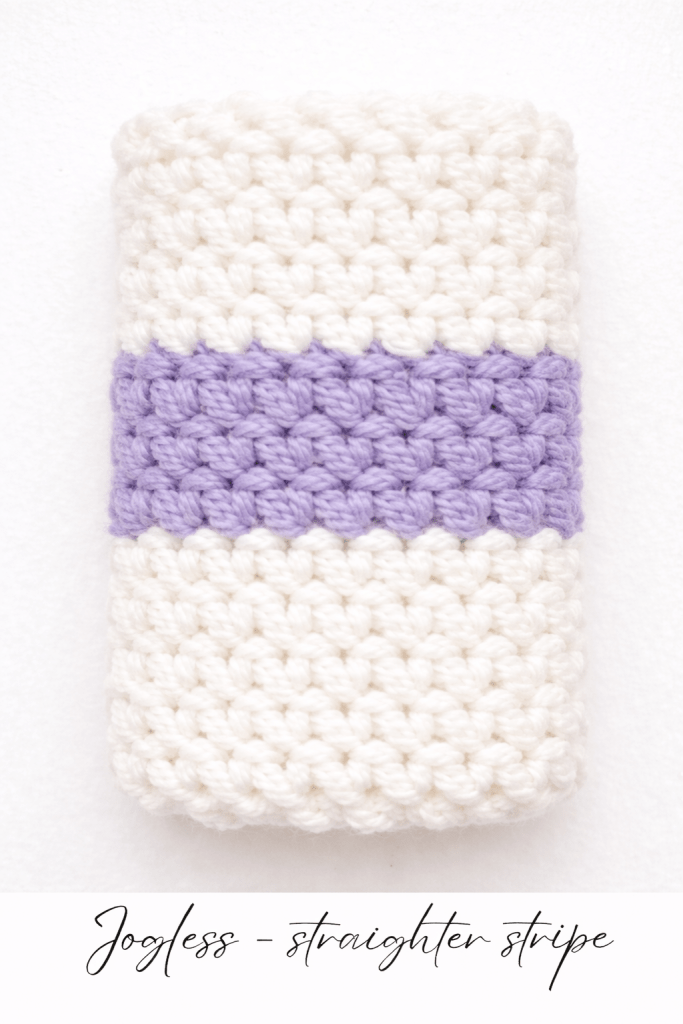
When to Use a Jogless Stripe Technique
This method is perfect for:
- Amigurumi toys
- Crochet plushies
- Striped limbs, bodies, and accessories
- Any project worked in continuous rounds where colour changes matter
How to Crochet a Jogless Stripe in Amigurumi (UK Terms)
Step 1: Finish the Last Stitch of the Old Colour
Work the final stitch of the round until the last yarn over.
Step 2: Change to the New Colour
Yarn over with the new colour and pull through to complete the stitch.
This ensures the stitch belongs to the new colour.
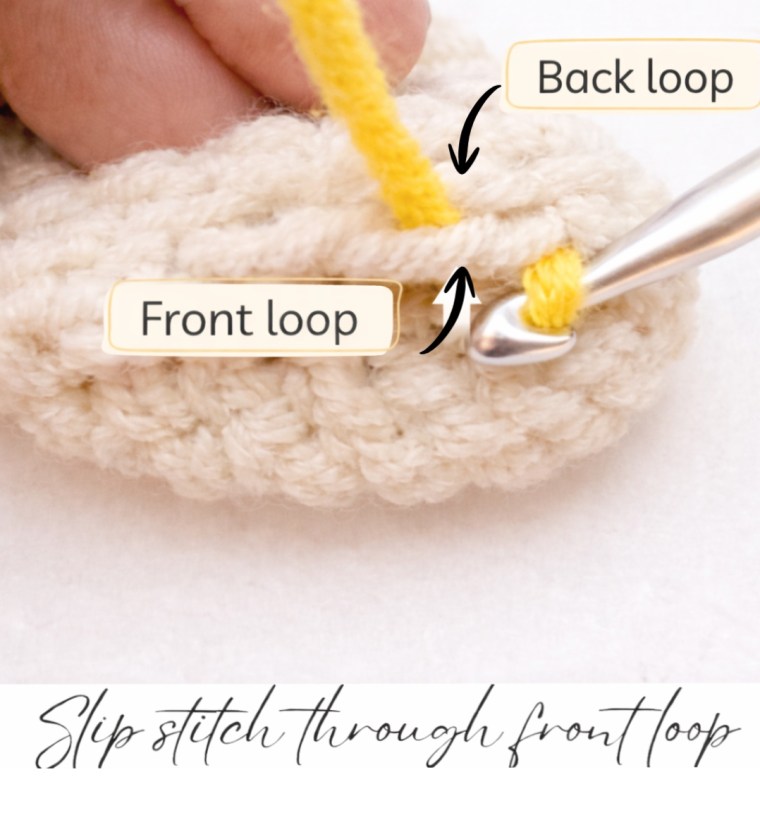
Step 3: Slip Stitch in the Front Loop
Slip stitch into the front loop only of the next stitch using the new colour. This counts as the first stitch.
This is the key step that softens the jog.
Step 4: Continue Crocheting as Normal
Carry on crocheting in continuous rounds, working into both loops as usual unless your pattern says otherwise.
Why the Front Loop Slip Stitch Works
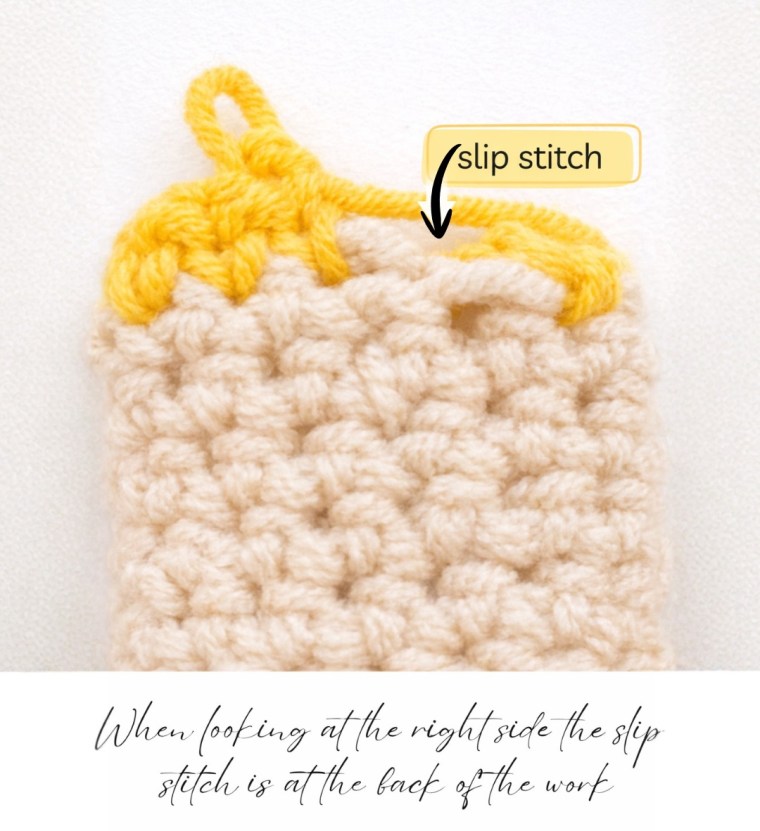
- The front loop sits inside the amigurmi, meaning the join visually lies towards the back of the work when viewed from the right side.
- Slip stitching here subtly pulls the colour change backward
- This visually levels the stripe without disrupting shaping
It’s especially effective on tightly stitched amigurumi fabric.
Tips for the Neatest Stripes
Keep the slip stitch relaxed, not tight
Place a stitch marker in the slip stitch to remind you that this counts as your first stitch
Always place slip stitch in front loop and work rest of stitches in both loops unless the pattern states otherwise.
Use this technique only at colour changes, not every round
Common Mistakes to Avoid
Slip stitching through both loops (less effective)
Not counting the slip stitch as the first st of the round
Pulling the slip stitch too tight
Forgetting you’re still working in a spiral
Final Thoughts
This jogless stripe method is a brilliant little finishing trick — subtle, simple, and perfect for amigurumi. It keeps your stitch count steady. It gives your stripes a cleaner, more intentional look, helping to level up your work — ideal for market stock, custom orders and gifting.
Save this post for later so you can come back to it whenever you’re adding stripes to your makes
If you have enjoyed this post you can help support what I do by
• leave me a like or a comment below
• Join me here and hit follow so you don’t miss new free patterns and all the crochet goodness I share along the way.

 Crochet blog